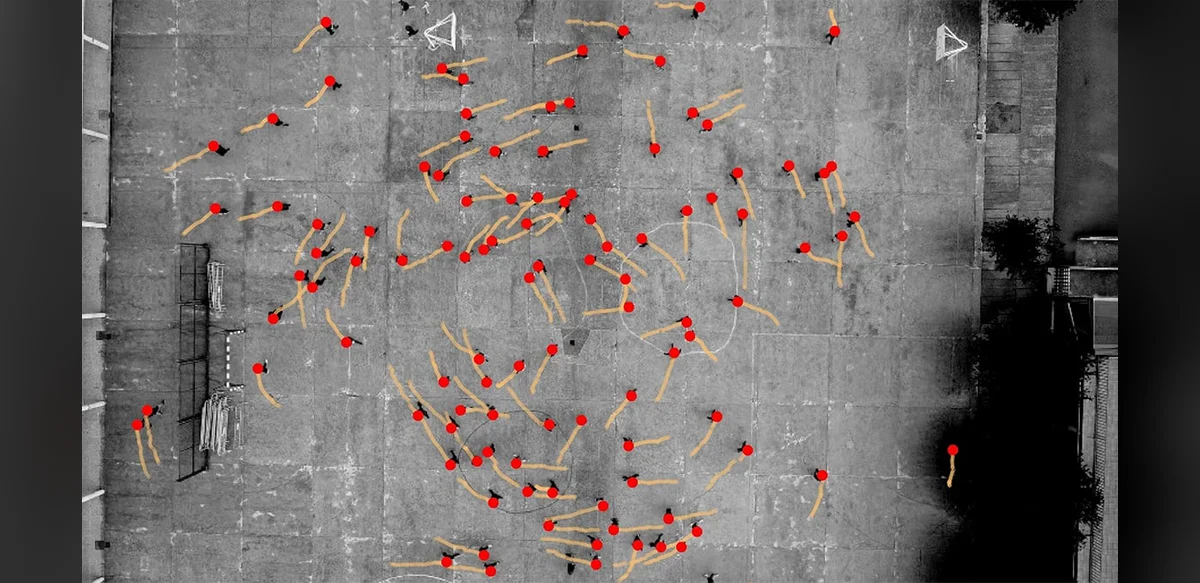
Imagine exploring an open area without a set path, such as a park or festival grounds. Do you favor left turns or right ones? An international research group investigated this after earlier observations during the COVID pandemic suggested human movement may not be as random as assumed. The team examined turning patterns across different ages, cultures, and environments. Results revealed a clear preference for counterclockwise, or left, turns. Engineer Claudio Feliciani, formerly at the University of Tokyo, noted the finding was unexpected, as random walking should show no overall direction. Yet data confirmed a measurable counterclockwise tendency under equal conditions. Similar biases have appeared in settings like concert circle pits. To isolate causes, experiments occurred in Spain and Japan, using open and enclosed areas with participants of varying young ages. One test involved 209 individuals walking alone inside a hexagonal space formed by furniture, eliminating crowd effects. A modest but significant leftward bias persisted across trials and was unaffected by handedness, foot dominance, or sex. Age showed minor influence, with stronger bias among younger participants, though the study covered only up to mid-30s. Biological factors appear responsible, as eye patching did not alter results and large-scale forces like Earth’s magnetism seem improbable. Implications span architecture, crowd management, and emergency planning for sites such as airports, museums, and stadiums. Evacuation designs could benefit from accounting for this pattern. Parallels exist in certain sports with counterclockwise courses. Future work may explore older adults, mobility variations, virtual reality tests, and similar behaviors in animals like ants. The findings appeared in Nature Communications.