

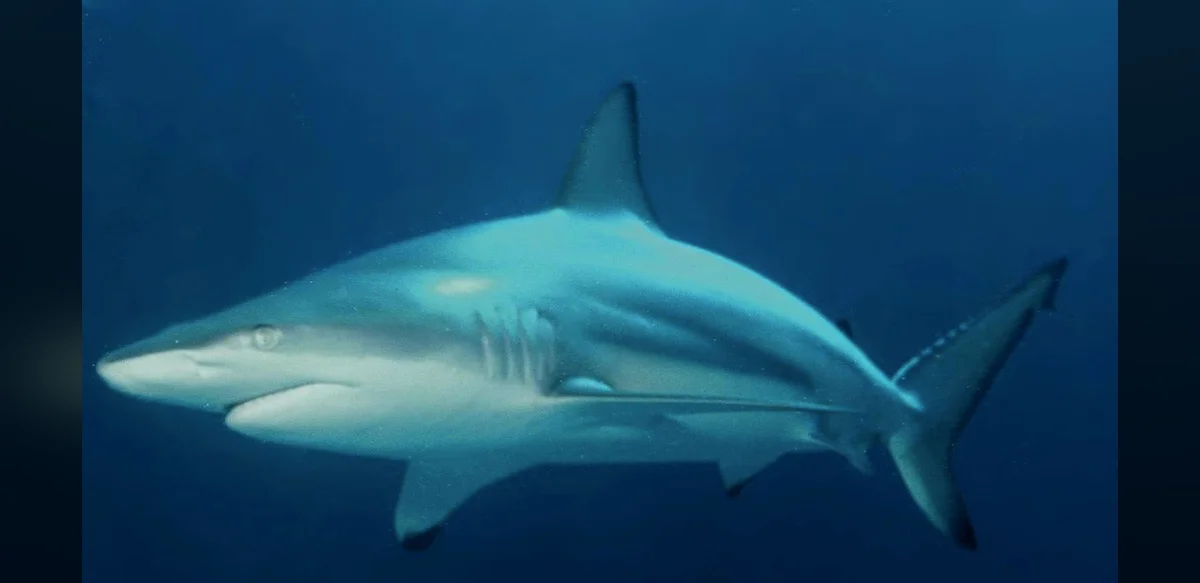
A recent investigation by scientists at Florida Atlantic University has shown that blacktip sharks in natural settings can sense low-frequency sounds across substantial distances. The work offers new understanding of how these animals move and orient themselves beneath the waves.
Researchers observed the sharks responding with quick directional shifts when sounds were introduced. These abrupt turns demonstrated precise localization of the noise source, suggesting an advanced hearing system suited to open water conditions.
The findings emphasize the role of sound detection in daily navigation for the species. By reacting promptly to acoustic signals, the sharks appear able to adjust their paths efficiently while traveling through their habitat.
Marine environments present unique challenges for orientation, and auditory cues may help compensate for limited visibility at greater depths. The study illustrates how such sensory capabilities support survival and movement patterns.
Further analysis of the data collected during field observations confirmed consistent responses across multiple individuals. This consistency strengthens the conclusion that the behavior is a reliable trait rather than an isolated occurrence.
The research contributes to ongoing efforts to document sensory biology in large marine predators. Detailed records of distance and frequency ranges involved in detection provide a foundation for additional inquiry into similar abilities in related species.
Public interest in ocean life often centers on visible behaviors, yet hidden sensory skills like long-range hearing remain essential to ecosystem dynamics. Documenting these traits helps build a more complete picture of underwater interactions.
Continued monitoring of wild populations will be necessary to determine whether environmental changes affect sound detection performance. The current results serve as a baseline for tracking any future variations in response thresholds.
Overall, the project underscores the value of studying animals in their native surroundings rather than controlled settings alone. Natural conditions reveal authentic reactions that laboratory tests may not fully capture.
Scientists involved noted that the directional responses occurred rapidly, indicating an immediate processing of auditory information. This speed likely aids in avoiding potential disturbances or locating relevant stimuli within the vast ocean space.
The study adds to the body of knowledge on how sharks integrate multiple senses during routine activities. Hearing joins other known mechanisms such as electroreception in guiding movement and decision-making.
By focusing on wild blacktip sharks, the team avoided artifacts that can arise when animals are confined or handled. The approach yielded observations that reflect genuine ecological behaviors.
Expanded discussion of the results appears in a peer-reviewed publication, allowing other researchers to examine the methods and replicate aspects of the work if desired. Such transparency supports cumulative progress in the field.
Readers interested in marine science may find these observations useful for appreciating the complexity of shark sensory systems. The ability to detect sounds from afar represents one component of a broader suite of adaptations.
Future projects could explore whether similar hearing ranges exist in additional shark species or vary by geographic region. The present evidence establishes a clear starting point for such comparative studies.
In summary, the investigation demonstrates that blacktip sharks possess notable auditory reach and directional sensitivity under natural conditions. These traits likely enhance their capacity to navigate expansive aquatic territories effectively.

