


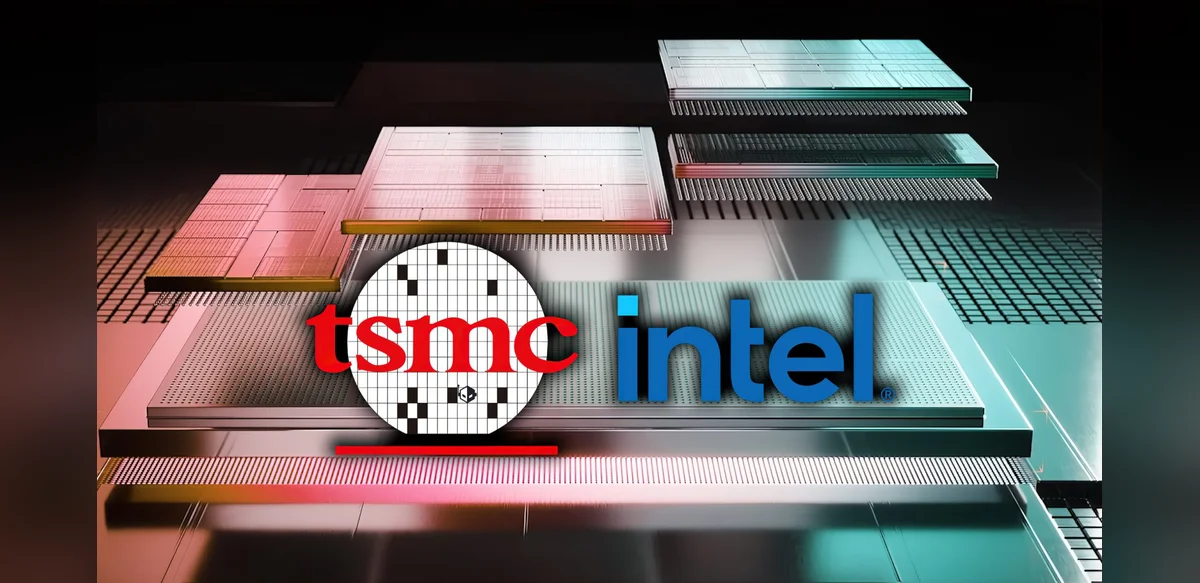
The semiconductor industry continues to evolve rapidly as companies seek advanced methods to integrate multiple chips into single packages. Recent developments indicate that Taiwan Semiconductor Manufacturing Company has acknowledged the strength of a competing technology from Intel. This recognition has prompted internal efforts to develop a similar solution internally referred to as a quasi version of the approach.
Industry observers note that capacity constraints affect one of TSMC’s key packaging methods known as CoWoS. These limitations are expected to persist until at least the end of 2026. As a result the company is exploring alternative pathways to meet customer demands for high performance chip integration.
Intel’s embedded multi die interconnect bridge technology has emerged as a notable option in this space. TSMC appears to view it as a serious competitive factor. In response the firm has initiated work on its own variant that draws from the core principles of the Intel design while adapting them to existing production lines.
This move highlights the ongoing competition in advanced packaging solutions. Such technologies allow for greater flexibility in combining different types of chips such as processors memory and accelerators. They also help address challenges related to power efficiency and signal transmission between components.
The decision to pursue this internal project comes amid broader supply chain pressures. Manufacturers worldwide are working to expand capabilities in chip packaging as traditional scaling of individual transistors becomes more difficult. Alternative approaches like multi chip modules have gained prominence.
TSMC’s acknowledgment of the rival method underscores the dynamic nature of technological progress in the sector. Companies must continuously evaluate and sometimes adopt ideas from competitors to maintain their positions. The quasi approach is intended to provide comparable benefits without relying solely on the constrained CoWoS capacity.
Looking ahead the industry will likely see further innovations in this area. Firms are investing heavily in research to overcome bottlenecks and deliver next generation products. The current situation illustrates how capacity issues can drive strategic shifts toward hybrid or inspired solutions.
Overall these developments reflect the interconnected global landscape of semiconductor production. Collaboration and competition coexist as players strive to advance the state of the art. TSMC’s initiative represents one example of adaptation in response to both technological and logistical realities.
Further details on timelines and specific implementations remain limited at this stage. However the focus on developing an internal alternative signals a proactive stance toward addressing customer needs over the coming years. The emphasis stays on maintaining leadership through flexible manufacturing strategies.
In summary the reported project aims to bridge gaps created by existing constraints while recognizing the merits of established competing techniques. This balanced approach may help sustain momentum in an increasingly complex market environment where packaging innovations play a central role.

