


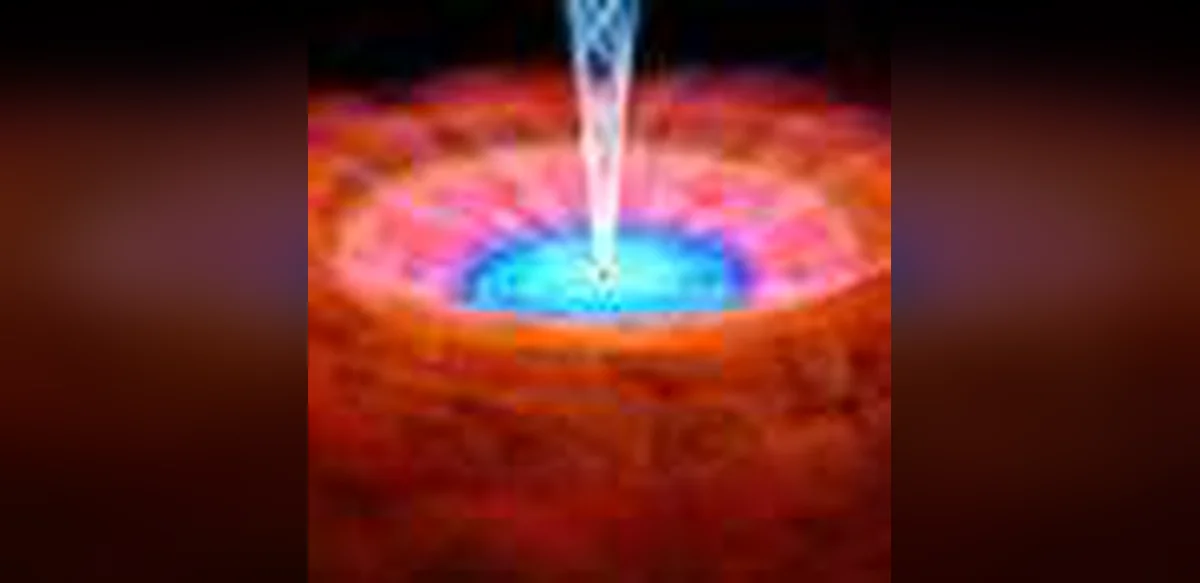
The X-Ray Imaging and Spectroscopy Mission, or XRISM, is helping University of Michigan researchers address a key puzzle in astronomy: why the universe’s largest galaxies contain fewer stars than models predict. Observations indicate that powerful outflows from central black holes are limiting new star formation.
Black holes draw in gas and dust, forming an energetic accretion disk that emits intense X-rays. Within this disk, friction and gravity heat the material into plasma and launch strong winds capable of expelling the gas galaxies require for star birth.
Using XRISM observations of NGC 4151, a bright galaxy roughly 50 million light-years away with an active galactic nucleus, doctoral student Xin Xiang examined the structure and timing of these outflows. XRISM’s high energy resolution, about ten times better than earlier instruments, allowed detection of fine details previously unseen.
Xiang found that the winds reach speeds sufficient to clear surrounding material. Analysis of X-ray brightness and hardness over hundreds of days showed that the fastest, strongest winds occur when X-rays are hard yet faint, typically about 10,000 seconds after flares. This timing provides the first direct link between disk activity and outflow strength.
The findings support the idea that black hole winds regulate star formation in massive galaxies and offer a method to predict when such outflows occur elsewhere.

