


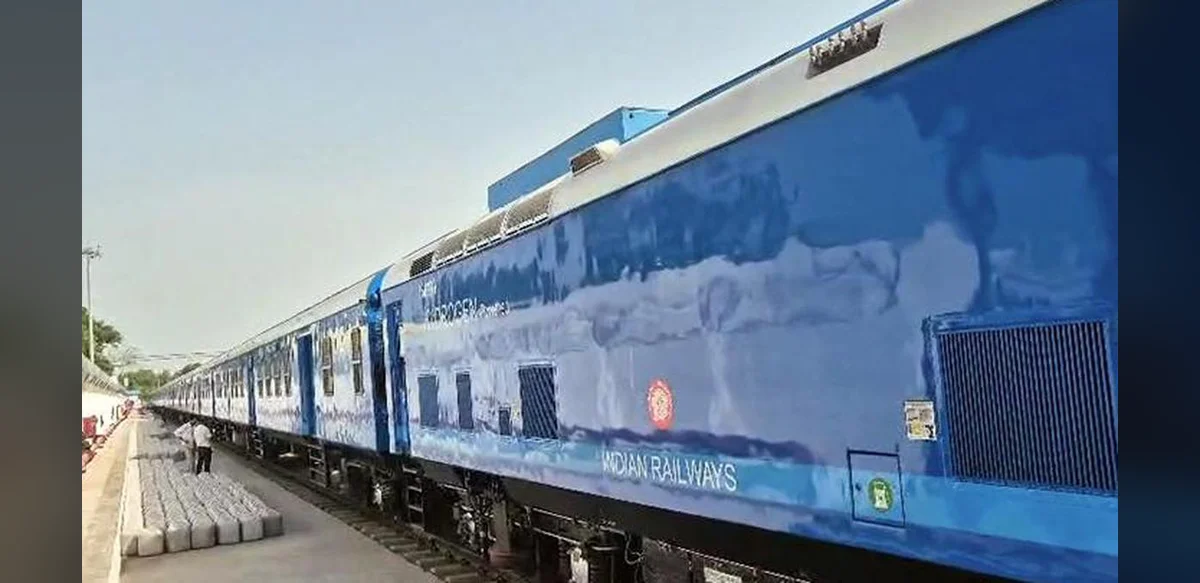
Background: Prime Minister Narendra Modi is set to inaugurate India’s first hydrogen-powered train on the 89-kilometre Jind-Sonipat route in Haryana on July 17. The project represents a shift for Indian Railways toward cleaner energy sources, according to Railway Minister Ashwini Vaishnaw.
A hydrogen-powered train explained
The ten-coach train can carry about 2,600 passengers and produces electricity on board using hydrogen as fuel. It creates power through a chemical reaction between hydrogen and oxygen, releasing only water vapour. The train operates at 75 kmph on the route and has a maximum design speed of 110 kmph.
Instead of burning diesel, the train uses a Proton Exchange Membrane fuel cell. Hydrogen from onboard cylinders reacts with air inside the cell to generate electricity for the motors. By-products are limited to water vapour and heat, with no combustion or emissions.
The train features two Hydrogen Driving Power Cars and eight trailer coaches. Each power car contains fuel cells, lithium iron phosphate batteries and hydrogen cylinders, delivering 1,200 kW per unit.
Hydrogen supply
A dedicated facility at Jind produces hydrogen via electrolysis, compresses it to 500 bar and dispenses it at 350 bar. The plant holds around 3,000 kg of hydrogen, enough for regular service, and has received safety clearance.
The Research Designs and Standards Organisation set technical standards, Medha Servo Drives integrated the trainset and Integral Coach Factory handled exterior design.
Safety measures
Although hydrogen is flammable, the system includes continuous leak detection, ventilation, automatic shut-off valves and emergency controls. The driver’s cabin displays system status and allows safe movement if needed. The Jind plant has similar protections and underwent independent assessment by TÜV SÜD.
Global context
Hydrogen trains remain in early development worldwide.

