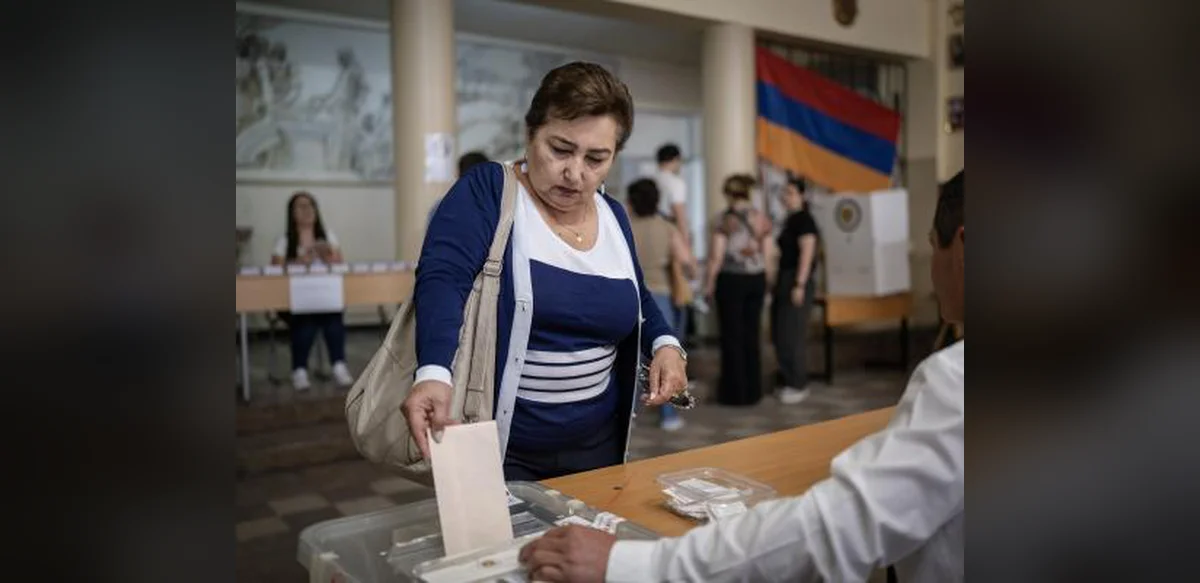
Armenians head to the polls in a national election that may solidify the country’s pivot toward Europe and away from its longstanding partnership with Russia. Prime Minister Nikol Pashinyan’s Civil Contract party leads as the frontrunner, ahead of three opposition figures who favor stronger links with Moscow. His chief rival, Samvel Karapetyan, a Russian-Armenian tycoon whose wealth was largely built in Russia, campaigns under house arrest from his residence near Yerevan. Much rests on the outcome for the South Caucasus nation of three million, as Moscow, Brussels and Washington monitor developments. A win for Karapetyan could steer Armenia toward a path like that of neighboring Georgia, where a billionaire with Russian ties has rolled back pro-Western policies and drawn the country closer to Moscow. A decisive victory for Pashinyan would instead grant him authority to advance his key objective: a peace deal with Azerbaijan and normalized ties with Turkey. A former journalist who rose during the 2018 Velvet Revolution, Pashinyan has run on a peace platform, claiming that resolving long-standing disputes with neighbors would bring economic gains, greater security and less reliance on Russia. He has pursued closer European relations, indicating Armenia’s path lies with Western integration and voicing hopes of eventual European Union membership. Pashinyan gained support from Donald Trump, who called him a strong partner and leader. The United States has played a growing part in mediating between Armenia and Azerbaijan. Sunday’s ballot marks the first nationwide vote since Armenia lost Nagorno-Karabakh to Azerbaijan in 2023, a setback that concluded over thirty years of Armenian administration of the territory. The opposition has framed the defeat as proof of Pashinyan’s shortcomings, charging him with yielding historic lands. Pashinyan has instead cast the episode as a turning point, arguing that the Karabakh focus locked Armenia into endless conflict and Russian dependence, and that moving past it opens a safer, more prosperous era. “Pashinyan has a vision for the future, the rest are stuck in the past,” said Anahit Sarkisyan, a Yerevan lawyer, after voting. “We can’t be in endless wars with our neighbours. It’s time to move forward.” Pashinyan’s direction has drawn Russian opposition, given Moscow’s long influence over Armenian affairs. Many Armenians felt let down when Russia did not intervene as Azerbaijan took Nagorno-Karabakh in 2023, despite Russian peacekeepers on site. This led Pashinyan to pause Armenia’s role in the Collective Security Treaty Organization, the sharpest break with Moscow since independence. Before the vote, Russian President Vladimir Putin cautioned that Armenia, though not yet an EU applicant, was following Ukraine’s route. Armenian officials and analysts have accused Russia of meddling via disinformation favoring pro-Moscow candidates and attempts to transport Armenians from Russia to vote against Pashinyan. Moscow has also imposed trade curbs on Armenian goods including flowers, fish, fruit and brandy. These steps have not yet harmed the economy, which has grown strongly from an influx of Russian businesses and funds after the Ukraine invasion. Pashinyan has directed spending to regional areas where his backing is firmest. Observers note his increasingly personal political style and critics point to rising authoritarian trends in a country that stands out as a democracy amid regional strongman rule. Authorities have detained opposition members, including from Karapetyan’s party, on charges such as vote-buying, financial offenses and calls to overthrow the government. Karapetyan was arrested in June on charges of inciting a power grab and has campaigned from house arrest.