


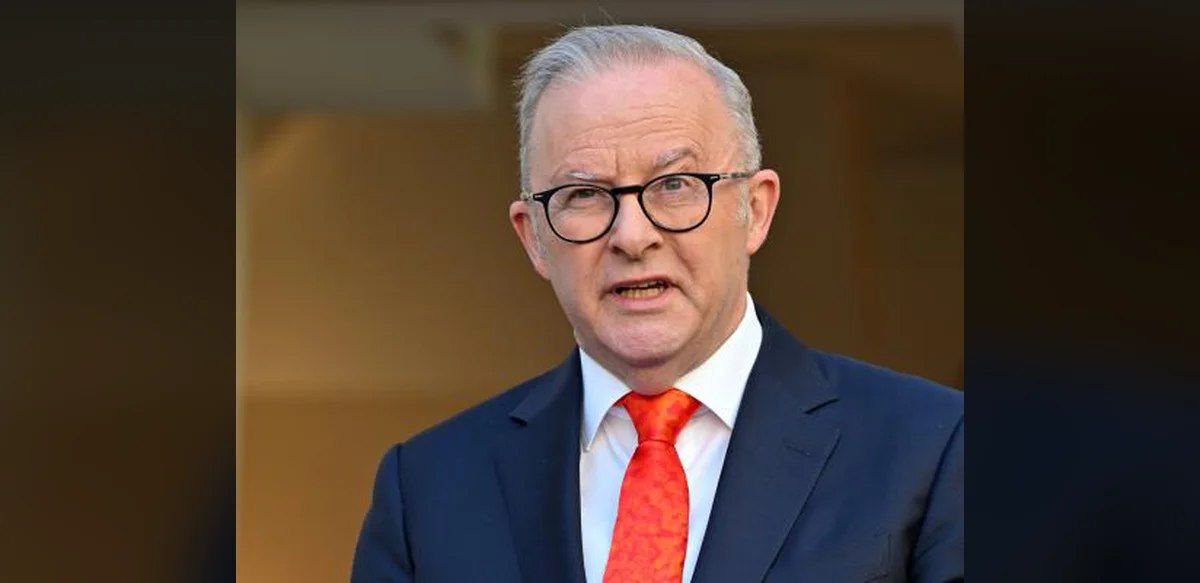
Australian Prime Minister Anthony Albanese has advocated for the complete reopening of the Strait of Hormuz to ensure unrestricted passage for vessels from all nations. This statement came as the newly appointed defense chief indicated that Australian naval assets are prepared to support any related operations if directed by the government.
Following U.S. President Donald Trump’s announcement of a blockade on the vital shipping lane starting Tuesday morning Australian time, Albanese encouraged both the United States and Iran to resume talks in Pakistan. He expressed disappointment over the unsuccessful weekend discussions and emphasized the need for reduced tensions and renewed dialogue.
Albanese made these remarks while revealing that Vice Admiral Mark Hammond, the current Navy chief, will assume the role of Australian Defense Force chief in July, succeeding David Johnston. Hammond affirmed that Australian military resources could participate in a multinational initiative to secure the strait, pending a governmental decision.
He described the Navy as fully prepared, noting that eight of its ten primary warships are operational. These vessels feature cutting-edge radar and missile defense technologies, making them suitable for the task. However, he clarified that no formal request for involvement has been received.
After the collapse of U.S.-led negotiations in Pakistan involving Vice President JD Vance, Trump warned of potential strikes on Iranian infrastructure, including water facilities, energy sites, and bridges, unless Iran dismantles its nuclear program. He directed the U.S. Navy to prevent all ship movements through the strait.
In response, Iran’s Revolutionary Guard stated that any enforcement attempts would violate the ceasefire and trigger a firm counteraction, while asserting control over the area. The strait handles approximately 20% of the world’s oil trade, currently disrupted by Iranian drone attacks and underwater explosives.
Trump has publicly noted Australia’s lack of participation in U.S. military efforts, though he claimed no assistance is necessary. Later, Defense Industry Minister Pat Conroy confirmed that Australia is not planning to join the blockade and has received no such invitation, excluding any aggressive involvement.
Albanese reiterated support for extending the ceasefire to include Israel’s confrontations with Hezbollah in southern Lebanon. He offered condolences to affected families, particularly those in Australia’s Lebanese community, and highlighted the conflict’s severe effects on developing nations reliant on fuel supplies.
Lebanon and Israel are scheduled to convene their initial meeting at the U.S. State Department on Tuesday to explore a truce and wider peace negotiations. Energy Minister Chris Bowen reported that 57 fuel cargoes, encompassing crude oil, aviation fuel, diesel, and gasoline, are en route to Australia. The government is preparing alternative measures, though it anticipates the strait’s eventual reopening.
This week, Albanese and Foreign Minister Penny Wong will travel to Brunei and Malaysia to strengthen fuel procurement arrangements.

