


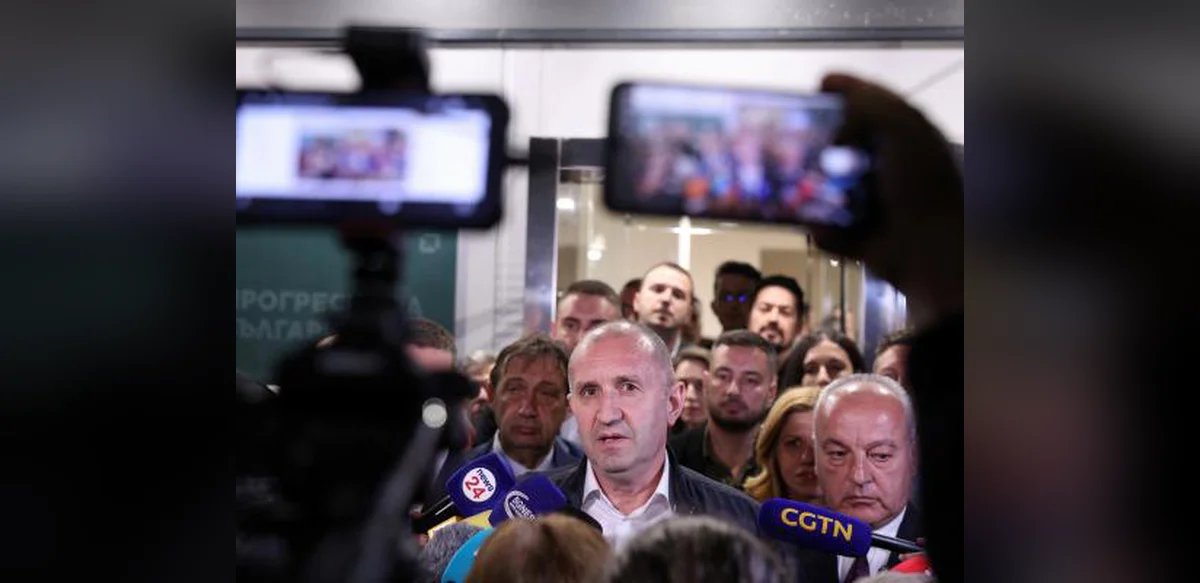
In Bulgaria’s recent parliamentary election, former president Rumen Radev, known for his skepticism toward the EU, has secured a clear majority. Projections indicate his Progressive Bulgaria coalition, which leans left and favors closer relations with Moscow, will hold at least 129 seats in the 240-seat assembly. This marks the first outright majority for a single group since 1997, when a pro-European center-right alliance prevailed.
Partial results, with over 91% of votes tallied, show Radev’s group at around 44%, promising a stable administration after eight elections in five years. Radev described the outcome as a ‘victory of hope’ and emphasized the need for critical thinking and pragmatism in building a strong Bulgaria and Europe. He criticized the EU for overreaching in its ambition to lead morally in a changing global landscape.
However, younger voters express doubts about Radev’s agenda. A 22-year-old law student, Aleksandar Tanev, views Radev as part of the entrenched political system he failed to challenge during his presidency. Analyst Dimitar Keranov from the German Marshall Fund noted a generational divide, with younger Bulgarians seeing Radev as representative of the old elite they wish to overhaul.
Radev’s win raises concerns in Brussels, potentially positioning him as a challenging figure similar to Hungary’s former leader Viktor Orban, especially given his opposition to additional military aid for Ukraine and calls to restore ties with Russia. Domestically, he targets corruption and has criticized the prior government’s euro adoption without public consultation, linking it to rising living costs.
Despite these stances, Radev affirmed Bulgaria’s commitment to its European trajectory following its eurozone entry this year. His foreign policy details remain unclear, with a focus expected on internal reforms.
Unlike the international acclaim for Hungary’s recent election, European leaders have not publicly congratulated Radev. Meanwhile, other developments include French President Emmanuel Macron’s visit to Poland for meetings with Prime Minister Donald Tusk and former leader Lech Walesa. Brazil’s President Lula is in Germany discussing trade with Chancellor Friedrich Merz. Hungary’s Orban indicated Ukraine might resume oil supplies via the Druzhba pipeline soon, potentially leading him to lift Hungary’s veto on a 90 billion euro EU loan for Ukraine.
This update comes on Monday, April 20, 2026, from Europe Live.

