


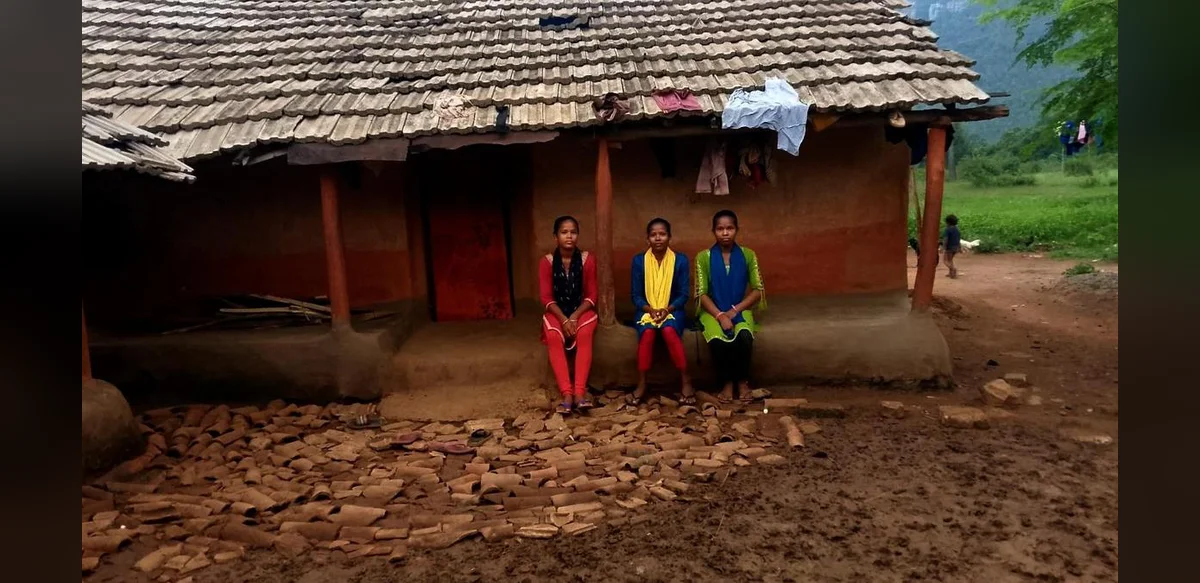
When the MGR Chennai Central–Bhubaneswar Superfast Express reached Bhubaneswar station on June 27 morning, Sari Juang and her two younger sisters had narrowly escaped death. The more than 1,500 km return journey to Odisha followed a deadly ammonia gas leak at their workplace, a seafood processing plant in Tamil Nadu’s Tiruvallur district, on June 21.
Sari and sisters Sasmita and Ratni saw the destruction from the leak that killed co-workers, mostly women and minor girls from Odisha. Of the 17 migrant workers who died, 14 were from Odisha, all teenagers from the Juang community, two from Assam and one from Jharkhand. Some workers remain in treatment in Tamil Nadu hospitals.
Survivors said the leak happened outside residential quarters at night, exposing workers to fumes while asleep. Officials said labour contractors hired women and minor girls from the Juang tribal community, a Particularly Vulnerable Tribal Group from Odisha, by promising steady income and advance payments.
By the time Sari reached her village Kodipasa in Keonjhar district’s Banspal block, two close friends had been cremated.
The Juang community lives in scattered hamlets across Keonjhar, Angul and Dhenkanal districts and depends on shifting cultivation and forest produce. Until recently, women and girls from Kodipasa rarely migrated far for work. An official from the Tribal Welfare Department noted that low literacy and limited exposure make Juangs unfamiliar with migration. Yet at least 20 girls from one village, including three still on ventilator support in Tamil Nadu, travelled south for the promised ₹15,000 monthly wage.
Sari said her family had no choice. With four sisters, two brothers and a deceased father, her mother’s earnings plus subsidised rice were insufficient. The sisters, all 18 or younger, hoped to earn enough to build a proper house.
Keonjhar is the home district of Odisha Chief Minister Mohan Majhi, whose government announced ₹10 lakh ex gratia for each deceased worker’s family. Nearby, Basang Juang, 50, pointed to a new tin roof bought with ₹9,000 sent by her daughter Phulamani, 18, one of the first five Juang girls who died.
Basang said her daughter previously walked 10 km daily for irregular construction work in Keonjhar town before choosing Tamil Nadu.
Two huts away, teenager Sujani Juanga supported an alcoholic brother, an intellectually challenged sister and another married sister. Their mother did odd jobs. Sujani had sent home ₹4,000 before the leak.
The Juang community’s poverty and cultural practices led to its PVTG status. The Juang Development Agency was set up in 1978 at Gonasika in Keonjhar to serve 5,490 people in 32 habitations, including Kodipasa.
After nearly five decades, the agency has brought limited change. While roads have improved, socio-economic conditions remain largely the same. The Kodipasa Ashram School, established in 1955, has had limited impact. Most young people leave after Class 10 to seek work elsewhere.
Village elder Saibani Juanga said daily wage labour is the main livelihood. Only one boy enrolled in college before dropping out. Construction work offers low, irregular pay, making migration the main option.

