


Japan has identified a promising location for a potential commercial underwater gold operation, though questions remain about whether extraction should proceed amid international discussion.
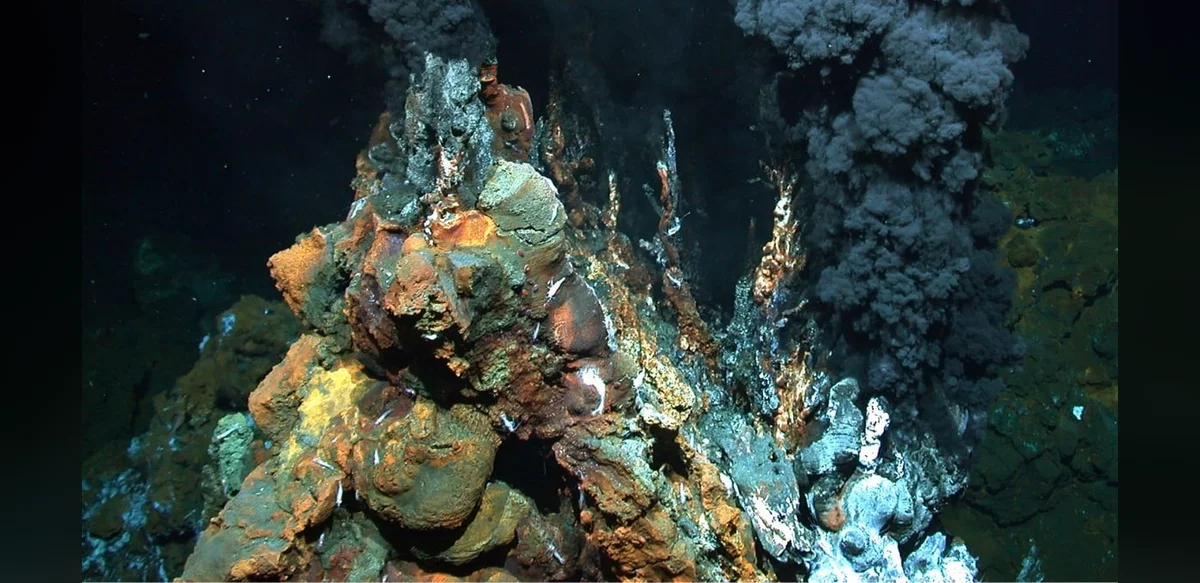
Researchers located black smoker chimneys and hydrothermal mounds inside a submerged volcanic crater off southeastern Japan. These structures actively produce large amounts of gold. They release tiny particles of the metal and also generate invisible gold embedded within seafloor minerals that cannot be detected by eye or conventional microscope.
Concentrations measured in this crater exceed those reported at any other known site worldwide. The findings appear in Scientific Reports, published shortly after an international group urged protection of active seafloor vents from mining.
The Higashi-Aogashima vents were first noted in 2015 inside Japan’s exclusive economic zone. The quantity of marine life supported by these fields remains unclear. Rock samples collected roughly 350 kilometers south of Tokyo were examined using sensitive mass spectrometry techniques.
Analyses revealed extremely high-grade invisible gold nanoparticles trapped inside pyrite, a common sulfide mineral often called fool’s gold. Gold occurs both as nanoparticles and as individual atoms within the mineral structure. The study concludes that pyrite at this site currently holds the world’s highest measured gold concentration.
The location lies at relatively shallow depth compared with other vents Japan has considered for development. Its accessibility and measured gold content increase interest in possible future extraction.
Active hydrothermal systems support specialized organisms including crustaceans, tubeworms, sponges, corals, crabs, fish, and octopuses. No commercial gold mine currently operates on the seafloor. Scientists continue to seek economical methods for recovering invisible gold from seafloor materials.
An earlier attempt to open an underwater mine near Papua New Guinea ended after financial difficulties and environmental opposition, resulting in reported losses for that nation. Papua New Guinea’s government has since backed a moratorium on further deep-sea mining projects. Several other Pacific nations have endorsed similar pauses until 2030.
Japan continues research into deep-sea mining despite political and environmental concerns. Earlier estimates already ranked the Higashi-Aogashima fields among the richest known seafloor sulfide deposits; the new data indicate even greater gold content than previously recognized.
The central question remains whether ocean mineral resources or marine ecosystems hold greater value. The study was published in Scientific Reports.

