


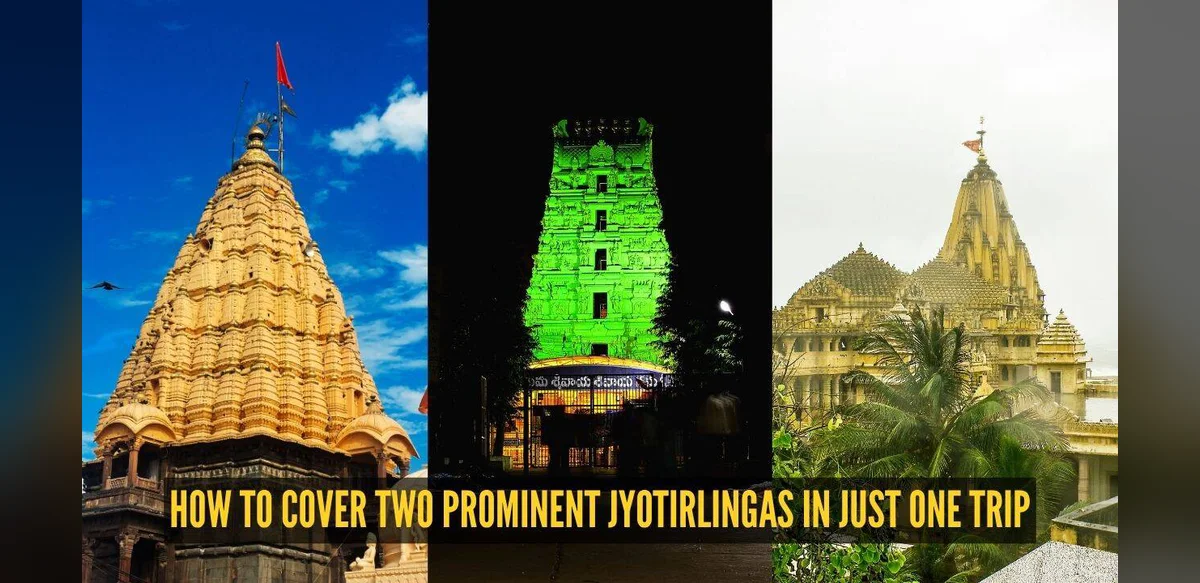
Mahakaleshwar and Omkareshwar lie in Ujjain and Omkareshwar, Madhya Pradesh. Somnath and Nageshwar are located at Somnath and Dwarka in Gujarat. Kashi Vishwanath and Baidyanath connect Varanasi in Uttar Pradesh with Deoghar in Jharkhand. Bhimashankar and Trimbakeshwar sit near Pune and Nashik in Maharashtra. Mallikarjuna and Ramanathaswamy appear in Srisailam, Andhra Pradesh, and Rameswaram, Tamil Nadu.
For pilgrims, reaching a Jyotirlinga ranks among Hinduism’s holiest journeys. Although these shrines stand across India, several pairs sit close enough or link well by transport for combined visits. Such pairings reduce both time and expense while allowing exploration of surrounding culture, history and landscapes. Five such combinations follow.
Careful planning improves comfort for families and older travellers alike. Routing nearby shrines together creates a smoother religious experience.
Start at Mahakaleshwar in Ujjain, known for its morning Bhasma Aarti, then cover roughly 140 km to Omkareshwar on the Narmada River. The drive lasts three to four hours, so both sites fit into two or three days. Indore airport provides convenient access.
Begin at Somnath on Gujarat’s coast, then proceed 235 km to Nageshwar near Dwarka. The road takes four to five hours. Many visitors add Dwarkadhish Temple and Bet Dwarka for a three- or four-day circuit.
See Kashi Vishwanath in Varanasi, then reach Baidyanath in Deoghar by overnight train, bus or flight. The route works well over four or five days, especially in Shravan when crowds peak.
Travel from Bhimashankar in the Sahyadri hills near Pune to Trimbakeshwar near Nashik, about 210 km away. The drive needs five to six hours and fits into three days alongside visits to vineyards and the Western Ghats.
Mallikarjuna in Srisailam and Ramanathaswamy in Rameswaram, though in separate states, combine via flights and roads through Hyderabad, Chennai or Madurai. Five to seven days allow time for both temples and southern scenery.
Pairing two Jyotirlingas optimises travel and deepens the spiritual journey. Good transport and routes let visitors absorb India’s religious heritage, local traditions and natural settings at a measured pace. Whether motivated by faith or culture, these pairings offer rewarding pilgrimages.
Check temple hours, weather and transport before travel, particularly during Shravan or Mahashivratri. Advance bookings for flights, trains and lodging prevent delays. Carry light clothing, identification, medicines and extra time for rituals. Nearby historic sites, rivers and landmarks reward added leisure for fuller appreciation of each destination.

