


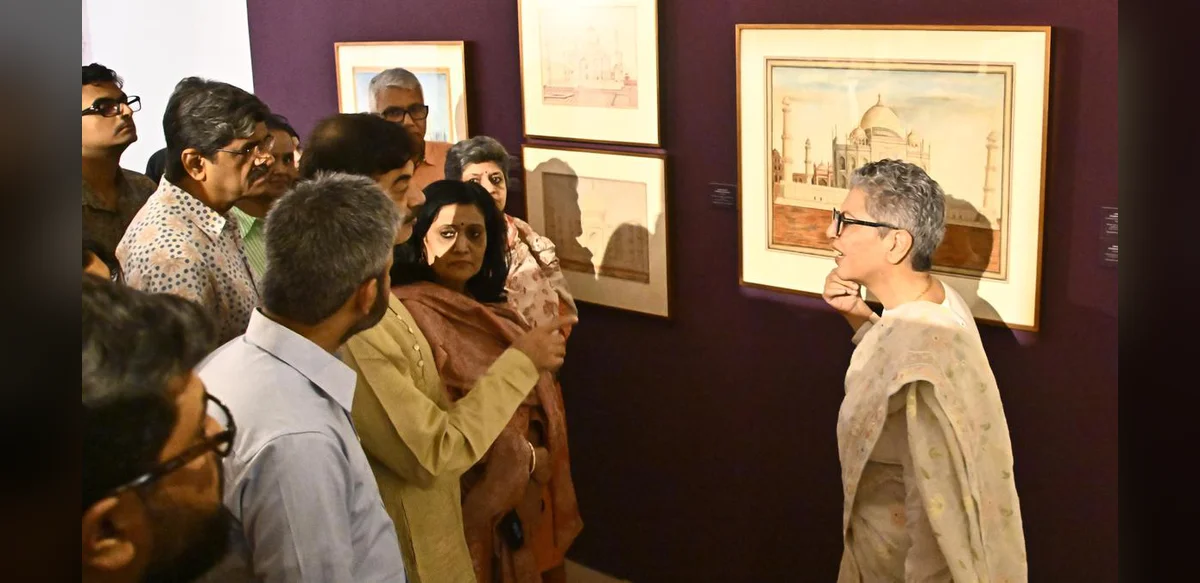
Historian and writer Rana Safvi described the Taj Mahal as an architectural representation of Islamic theology, spirituality and the soul’s passage from earthly life to eternity. She made the remarks while opening the exhibition The Mute Eloquence of the Taj Mahal at the Salar Jung Museum in Hyderabad on Sunday. The display, created with DAG, runs for three months until October 4 and explores the 17th-century structure through its design, inscriptions, symbols and ideas rather than as a simple marble tomb.
Safvi said her view of the monument changed after studying Islamic architecture, Sufi thought and Persian poetry. She now sees it as a meditation on mortality, resurrection and divine order, shaped by Emperor Shah Jahan’s ties to the Chishti Sufi order. Elements such as the gardens, calligraphy, proportions and light were planned to guide visitors on a symbolic spiritual path.
The experience starts at the main gateway, where Quranic verses welcome visitors into paradise. Many people today, however, focus on photographs instead of the texts. The original Mughal garden followed the Quranic image of paradise with waterways representing heavenly rivers, but colonial alterations turned it into an English-style lawn.
Museum curator Joyoti Roy said the exhibition supports the institution’s aim to present its broad character by hosting major shows from across India. The Taj Mahal holds a distinct position in history, architecture, poetry and shared memory, and the event seeks to convey these deeper layers to visitors.

