


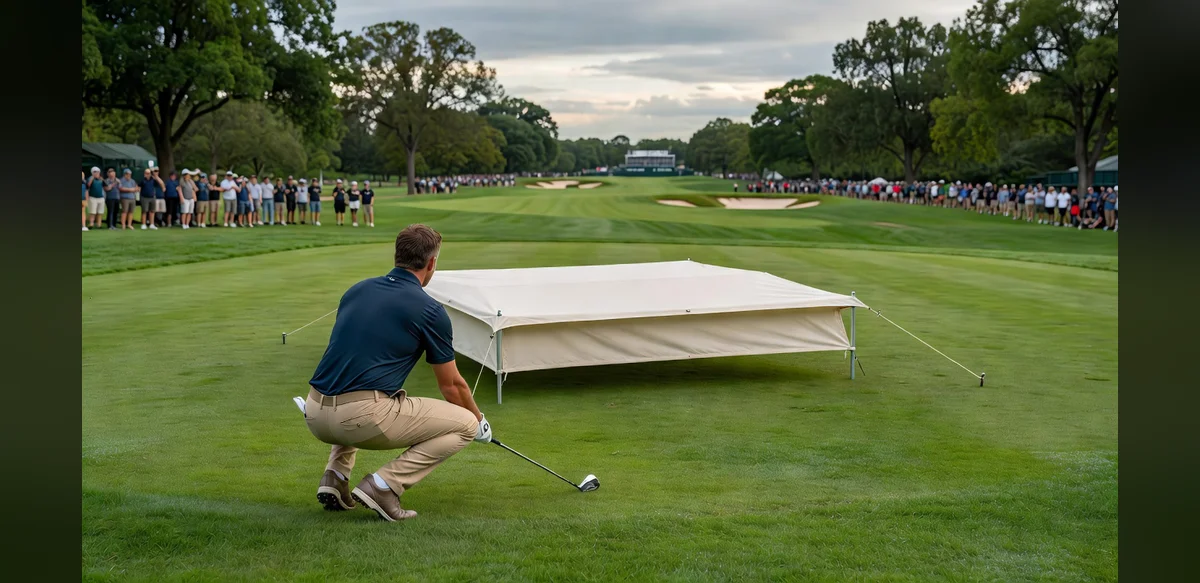
The final round of The 154th Open featured a notable incident involving a Temporary Immovable Obstruction ruling that drew attention to the boundaries of golf regulations. Observers questioned whether the decision aligned with the intended spirit of the rules or exposed a potential gap that could be used strategically. The situation centered on Scottie Scheffler and prompted broader discussion about how such provisions are applied under competitive pressure.
Rules in golf exist to maintain fairness and consistency across all levels of play. However, when an obstruction ruling occurs late in a major championship, it can shift perceptions of what constitutes acceptable strategy versus exploitation. The TIO provision allows relief from certain temporary structures, yet its application in this instance led to debate over whether the outcome reflected the rule as written or an interpretation that stretched its limits.
Critics argued that the decision highlighted an area where the regulations might benefit from clearer language to prevent similar occurrences. Supporters of the ruling maintained that officials followed established procedures and that any perceived advantage stemmed from the player’s positioning rather than an inherent flaw. This difference in viewpoint underscores the challenge of crafting rules that cover every possible scenario on a golf course.
The conversation extended beyond the specific event to the philosophy behind golf’s rulebook. Many participants and followers believe the regulations are designed with room for interpretation, allowing officials to exercise judgment. Others contend that this flexibility can lead to inconsistencies, particularly when high stakes are involved. The incident served as a reminder that even well-established guidelines can generate disagreement when applied in real time.
Looking ahead, governing bodies may review the TIO provision to determine if adjustments are warranted. Such reviews typically involve input from players, officials, and rules experts to balance clarity with the need to preserve the game’s traditions. Any changes would aim to reduce ambiguity while maintaining the core principle that competitors must navigate the course as it presents itself.
Public reaction to the ruling varied, with some expressing concern that the decision could influence future play and others viewing it as an isolated case unlikely to recur. Social media and golf forums saw extensive analysis of similar past incidents, comparing how officials handled comparable situations. These discussions often reveal the passion fans hold for the integrity of the sport.
Ultimately, the episode illustrated the ongoing tension between rigid rule enforcement and practical application during elite competition. While the facts of the specific ruling remain limited to the final round at The 154th Open, the questions it raised about exploitability continue to resonate within the golf community. Future tournaments may provide additional context on whether this case prompts lasting modifications or simply fades as an example of rules evolving through experience.

