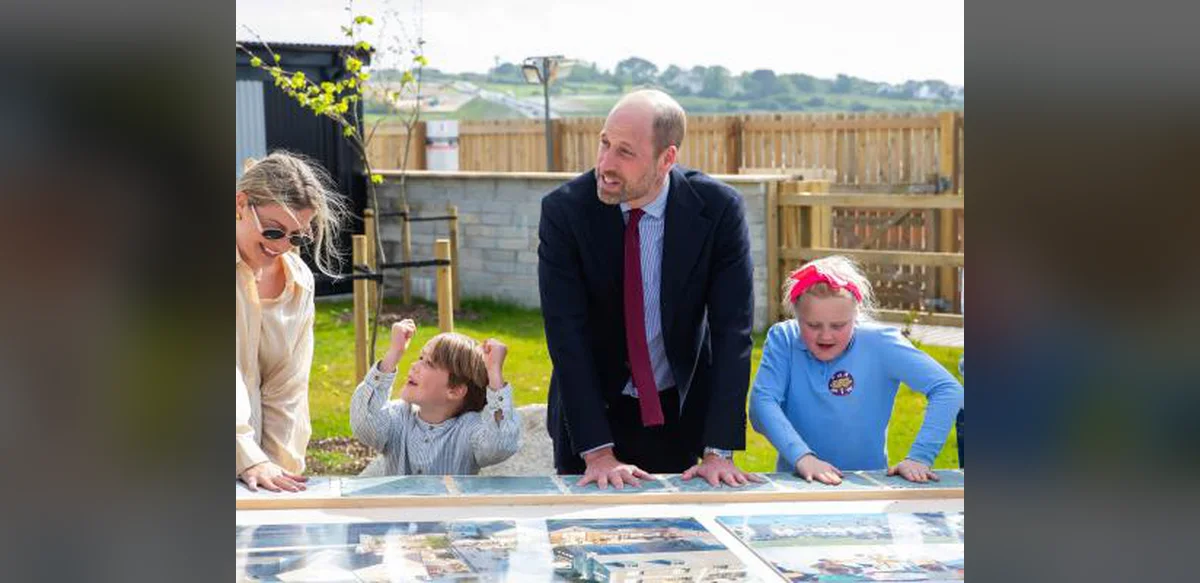
A bird of prey glides over fields filled with wildflowers that sparkle with yellow blooms, while heavy machinery operates on a building site preparing for a supermarket and community market hall. The project may signal support for traditional British shopping districts. The Prince of Wales recently inspected progress on what could become the UK’s newest high street in Nansledan, Cornwall, following a sports victory. His father the King launched construction in 2014 on the outskirts of Newquay, a coastal area famous for surfing. Drawing inspiration from revived market halls turned into hubs for independent businesses, such as one in Altrincham, the scheme blends small enterprises with accessible retail like the supermarket. Amid long-running discussions on the future of British high streets, Nansledan could represent a fresh approach, though concerns persist that it may harm the older shopping area in central Newquay. The brightly painted houses might appear overly quaint, with one resident comparing the scene to a movie set, yet the plan includes 30 percent affordable housing ranging from shared ownership to over 100 low-cost rentals. The prince’s visit followed announcements to sell 20 percent of estate properties over ten years and invest 500 million pounds in community and nature initiatives. The estate generates substantial annual income, and this project will produce revenue via rents and property sales. The development leader describes the vision as a walkable, mixed-use community that supports employment alongside housing. Currently home to more than 2,000 residents in roughly 900 units styled after traditional Cornish and art deco designs, the area will eventually include 3,700 homes, among them units for people facing homelessness. Short-term holiday lets are prohibited amid regional housing affordability challenges. Existing amenities feature a primary school, small businesses, bus routes, bike sharing, road access, and a more distant rail station. The site incorporates parks and 300 acres of natural space including wildflower meadows. Officials emphasize creating a living, working community where jobs and social ties shape all choices. A local deli shows a lively mix of families, older walkers, and couples at midday. An upstairs web firm with 20 staff evokes urban workspaces amid rural surroundings, complete with modern furnishings and computer setups. Nearby stand a clothing shop, jewelry outlet, pottery studio offering classes, and additional cafes. The estate plans to retain ownership of at least half the high street to aid businesses during varying conditions, enabling expansions or downsizing to sustain commercial and social vitality. Residents hold mixed views on whether the project offers new opportunities and a template for future towns or instead diverts investment from the adjacent older settlement. One worker at a Newquay haberdashery doubts any major competition, questioning what would draw shoppers for luxury items, but notes the need for greater retail variety beyond charity and coffee outlets, including affordable clothing. Following a store closure, limited options remain amid economic pressures and online competition. A colleague strongly opposes the development, arguing investment should focus on Newquay itself and fearing further loss of trade.