


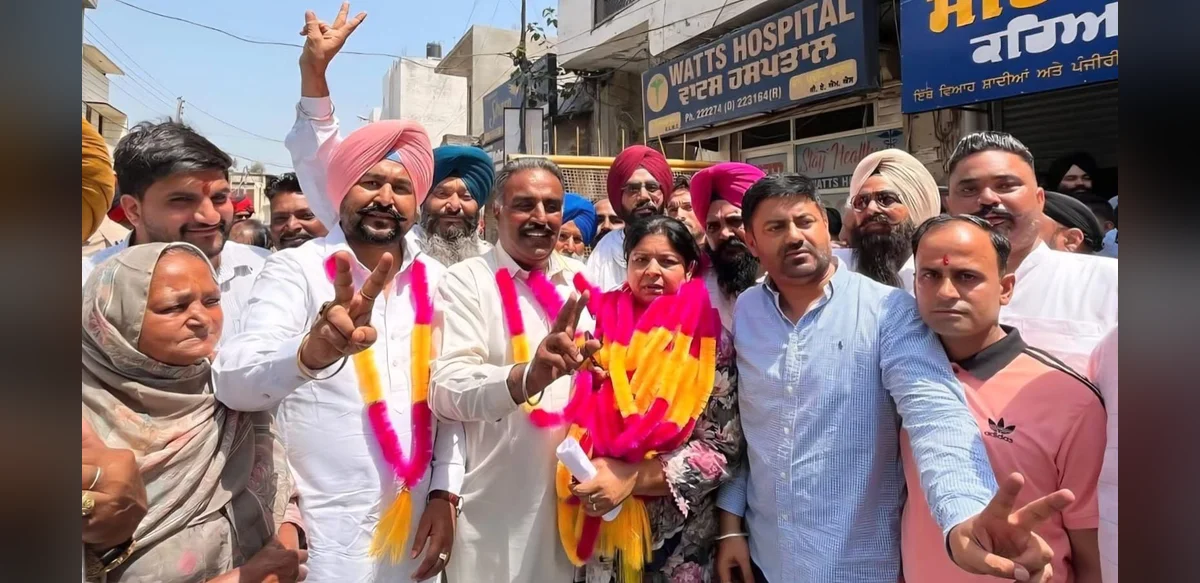
The Aam Aadmi Party appears secure in the ongoing Punjab municipal elections, with results due Friday. Yet these polls have revealed rising internal dissent, factionalism and competing power structures inside the party ahead of the 2027 state assembly contest.
The disputes emerged during urban local body voting held on May 26, seen by major parties as a key test before the next assembly elections.
In Bathinda, open conflict arose within AAP ranks rather than against outside rivals. Local MLA Jagroop Singh Gill criticised ticket allocation, accusing the party of concentrating power in one leader and his son, who lacked deep party roots. He named Amarjeet Singh Mehta and his son Padamjeet Singh Mehta, claiming recent Congress defectors received most nominations.
Tensions increased after gunfire was reported at the home of Gill’s nephew on the night of May 25-26. Gill’s relative is running as an independent from Ward 3. Gill stated that complaints against the Mehtas were ignored and an FIR was filed only against unknown persons due to pressure from Chandigarh leaders. He warned he would not abandon the party’s founding principles and accused it of favouring money and muscle power.
Gill compared the situation to past Congress tactics in the same city. He said he would remain loyal as long as possible but would leave if expelled.
Amarjeet Mehta dismissed the rift as the action of one individual that does not define the party. He noted his son’s work in a ward previously represented by Gill.
A party source acknowledged the episode exposed deeper divisions that could affect the 2027 assembly race more than the current local polls.
Similar friction appeared in Sangrur, where MLA Narinder Kaur Bharaj objected to an appointment backed by another AAP figure. During recent municipal voting, the two operated separately in different wards, signalling possible future rivalry.
In Samana, confusion followed the recent induction of a former SAD legislator into the party.

