


In last week’s parliamentary discussion on the Constitution (131st Amendment) Bill, opposition members pointed to boundary adjustments in Assam and Jammu and Kashmir to support their opposition to the legislation.
This overview examines the results of the boundary redrawing in Jammu and Kashmir and the reasons it faced resistance from most political groups, except the BJP.
When did the process occur?
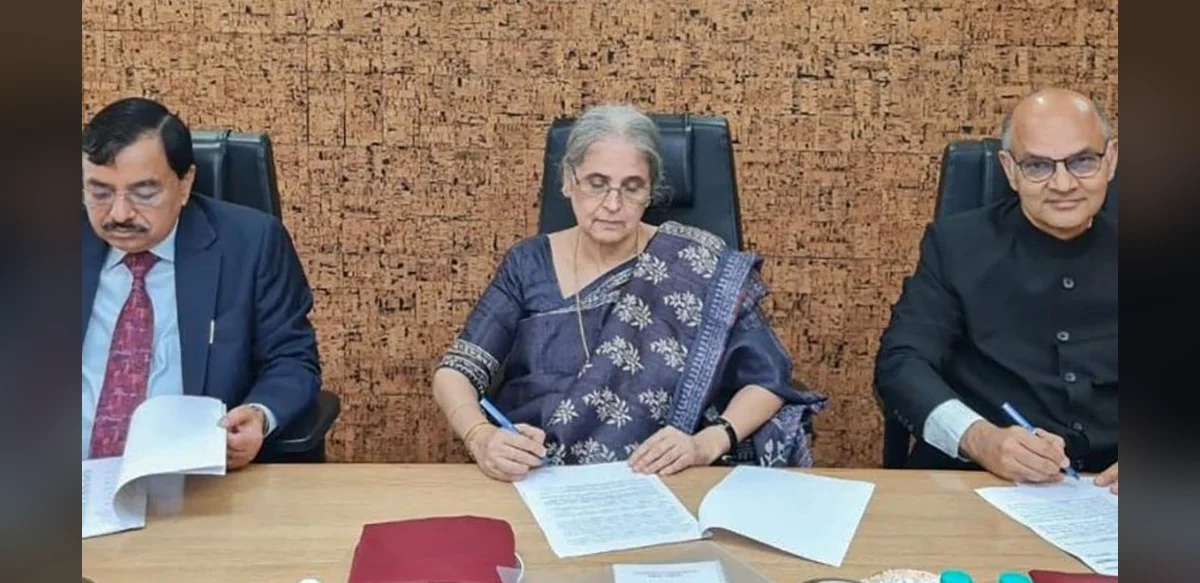
In 2020, the central government established a Delimitation Commission, led by former Supreme Court judge Justice Ranjana Prakash Desai, to establish additional assembly constituencies and revise parliamentary district lines in Jammu and Kashmir.
The need for this arose from the revocation of Article 370 in August 2019. Prior to that, parliamentary boundaries followed the national Constitution, while assembly seats were managed by the Jammu and Kashmir administration under the 1957 Representation of the People Act. Following the removal of special status, both types of boundaries fell under constitutional rules, with assembly seats expanded via the 2019 Reorganisation Act.
The former Jammu and Kashmir state included 111 assembly seats: 46 in the Kashmir Valley, 37 in Jammu, and four in Ladakh, plus 24 reserved for areas under Pakistani control.
After Ladakh became a separate Union Territory, the assembly retained 107 seats: 83 for Jammu and Kashmir and 24 for the reserved areas. The 2019 Act raised this to 114 seats: 90 for the region and 24 reserved.
The commission’s role involved adding new assembly seats and redefining boundaries for 90 assembly and five parliamentary districts.
Did controversies arise?
The creation of the commission sparked debate from the start, as the government chose to revise boundaries only in Jammu and Kashmir, while such processes were paused nationwide until 2026.
The previous redrawing in the region happened in 1995. In 2002, the administration under Farooq Abdullah modified the 1957 Act to halt further changes until 2026, aligning with national policy.
This decision was contested in the regional high court and later the Supreme Court by Bhim Singh of the National Panthers Party, but both courts supported the pause.
Local political groups questioned the commission’s formation, claiming it stemmed from the 2019 Reorganisation Act, which was under legal review and potentially invalid. They alleged it advanced the BJP’s interests.
Although boundary changes typically rely on recent census figures, the commission planned to factor in elements like area size, isolation, and proximity to borders for this case.
What alterations occurred?
For parliamentary seats, a key shift involved reassigning the Pir Panjal area, including Poonch and Rajouri districts, from the Jammu constituency to Anantnag in Kashmir. Another change separated a Shia-majority zone from Srinagar and incorporated it into Baramulla.
The commission added seven assembly seats: six in Jammu and one in Kashmir, resulting in 43 for Jammu (from 37) and 47 for Kashmir (from 46). The 2011 census guided these decisions.
This adjustment gave the Jammu region, with 44% of the population, 48% of seats, while Kashmir, with 56% population, received 52%. Previously, Kashmir held 55.4% of seats and Jammu 44.5%.
Additionally, the commission suggested allocating at least two assembly positions to Kashmiri migrant communities (Hindu) and proposed central government consideration for representatives from those displaced from Pakistani-controlled areas post-Partition.
What was the opposition’s view?
Despite the distance between Anantnag and Pir Panjal, parties viewed the reorganization as politically motivated, describing it as an effort to reduce influence of certain ethnic groups.

