


Published: April 20, 2026, 13:17 IST – 7-minute read
The challenges facing the Modi administration’s foreign policy have now extended to its domestic agenda. For more than a year, India’s international relations have been complicated by an inaccurate evaluation of U.S. President Donald Trump’s disposition and affinity for India. This situation has worsened due to underestimating Iran’s resilience in an ongoing conflict.
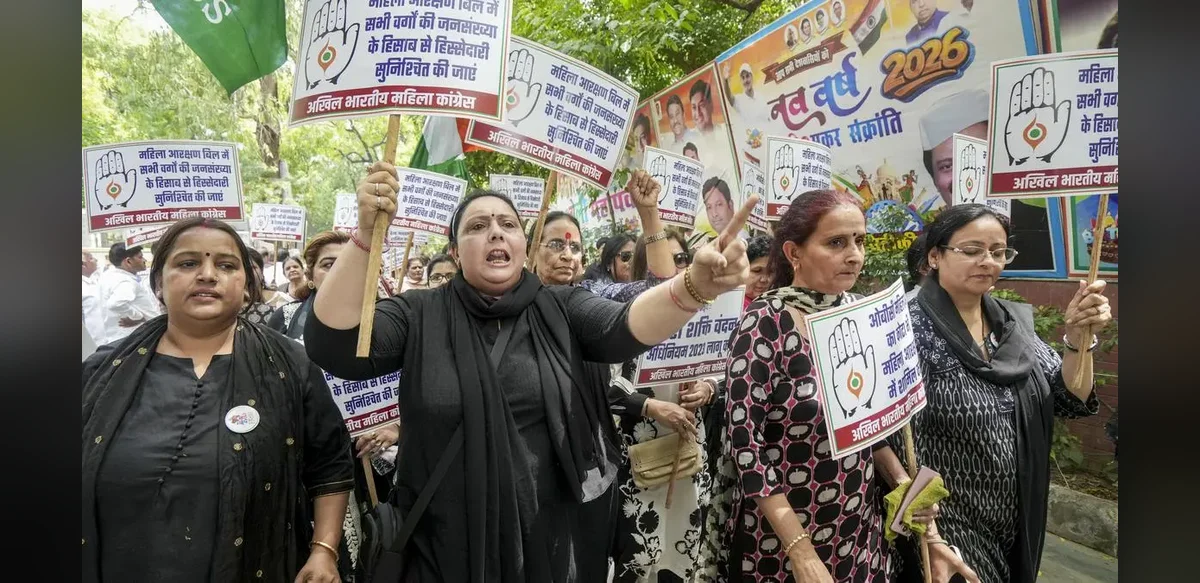
Similarly, a misjudgment of women’s demands for greater representation led to the failure of the 131st Constitutional (Amendment) Bill, 2026, in the Lok Sabha. The legislation aimed to implement reservations for women in an enlarged lower house, with seats reallocated among states and union territories based on the 2011 census through delimitation.
Unlike the prime minister’s quiet acceptance of foreign policy difficulties, Narendra Modi addressed the nation on April 18 to turn a major domestic setback into a political tool. His strong criticism of the opposition breached the election code of conduct and sought to use women’s issues to gain ground in West Bengal and Tamil Nadu.
The government’s approach to introducing the bill last week relied on the belief that parties in states facing reduced Lok Sabha representation would back it to avoid alienating female voters if reservations were not enacted by 2029. This assumed they would value women’s support more than maintaining their states’ influence in parliament.
This view implies a large, unified group of politically aware women who place representation above personal and family economic needs. If accurate, the P.V. Narasimha Rao administration, which established 33% reservations for women in local governance in 1992-93, would not have lost the 1996 elections.
Women do not form a uniform economic class and are unlikely to align on policies that affect different groups variably. While a more cohesive female voter base has developed since the 1990s, with greater independence in voting, this has largely resulted from state-provided financial benefits. In states like Bihar, Haryana, Jharkhand, and Maharashtra that held assembly elections since May 2024, many women supported incumbent parties offering direct cash transfers.
Modi and the BJP overlooked that financial aid holds more immediate appeal for women than reservations, especially given barriers to contesting elections. This error prompted scheduling a special parliamentary session for the bill just before assembly polls in West Bengal and Tamil Nadu, expecting local ruling parties to endorse it to retain women’s backing.
Welfare versus Representation
Neither the Trinamool Congress nor the Dravida Munnetra Kazhagam supported the measure, choosing to protect federal balance over women’s quotas. This decision is logical. For example, West Bengal Chief Minister Mamata Banerjee has built strong female support through economic programs like the Lakshmir Bhandar initiative, providing Rs.1,000 monthly to women aged 25-60 since 2021, increased to Rs.1,500 in the 2026 budget. Additional support includes incentives for girls’ education and marriage grants for low-income families.
Such programs likely offer stronger electoral advantages than reservations, particularly as the Trinamool has a superior record on gender inclusion compared to the BJP. It nominated 55 women candidates in the ongoing assembly election, 22 more than the BJP. Additionally, 38% of its MPs are women, the highest rate among parties, and 13.7% of West Bengal’s MLAs are women, ranking second nationally.
The DMK’s performance on gender representation is weaker, with only three of 22 MPs and six of 133 MLAs being women. However, it has strengthened ties with female voters through Rs.1,000 monthly transfers. If re-elected, it plans to provide Rs.8,000 vouchers for household appliances. Compared to the millions benefiting from these initiatives, a 33% reservation would impact far fewer.

