


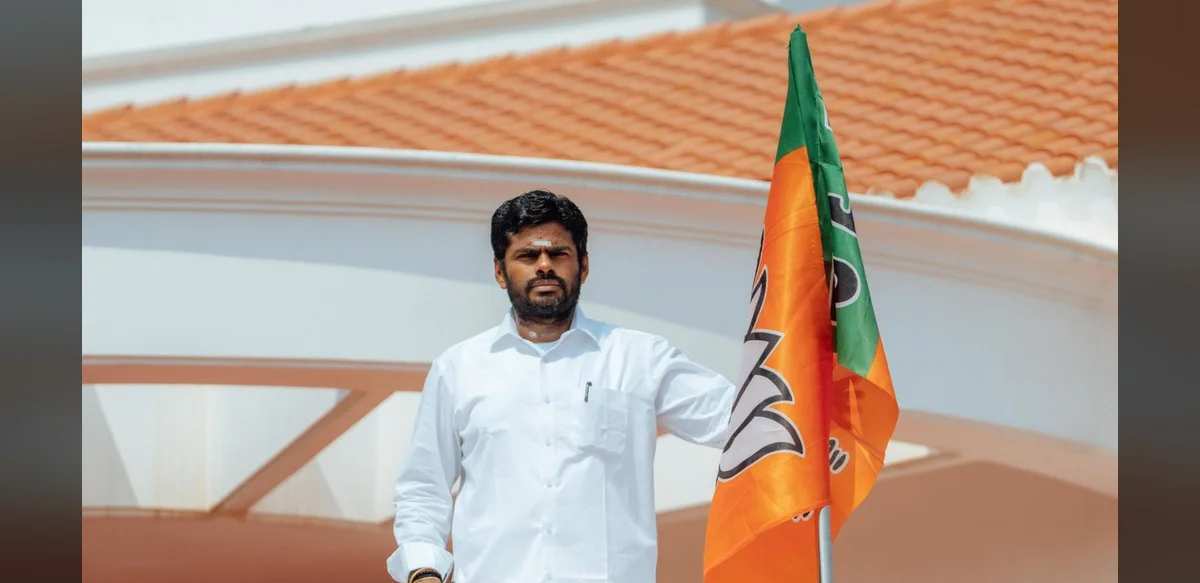
Until recently, observers wondered whether K Annamalai could establish the BJP in Tamil Nadu. The question has shifted to whether the state still provides sufficient room for him to achieve this within the party.
The 41-year-old former IPS officer has reportedly submitted his resignation to BJP president Nitin Nabin in Delhi. Party sources indicate the decision stems less from emotion than from calculations that developed over months and intensified after the assembly election that installed Chief Minister C Joseph Vijay.
For six years, Annamalai represented one of the BJP’s boldest efforts in Tamil Nadu. Young, articulate and media-savvy, he brought the prestige often linked to former civil servants. He spoke with authority drawn from district and police command experience. Like Vijay, he mastered social media, television and press interactions. He recognised that in Tamil Nadu, parties usually gain popularity only after their leaders do.
Annamalai nevertheless stood apart within the BJP. He seldom centred his identity on overt religious polarisation. His addresses focused on governance, corruption, administration, development, Tamil aspirations and political reform. Even his use of Hindutva themes was often framed in local political language.
His remark describing J Jayalalithaa as a “far superior Hindutva leader” illustrated both his instincts and constraints. Intended to reinterpret a Dravidian figure through a BJP perspective, it provoked strong criticism from her associates, including V K Sasikala and senior AIADMK figures.
The episode highlighted Annamalai’s tendency to prioritise expanding political space over defending ideological lines, a trait that once appealed to BJP strategists.
Vijay’s rise has altered the dynamics. Associates portray Annamalai more as a political entrepreneur than a conventional party figure. He left the police service seeking a wider platform rather than a specific party affiliation.
In a 2023 interview, he stated he had been “very allergic to politicians” as an officer, yet found politics attractive for its potential to deliver results more rapidly than the civil service.
This impatience persists. Friends note his difficulty operating within structures he cannot control. Supporters view it as leadership; critics call it restlessness.
Vijay’s emergence has further complicated matters. BJP leaders had viewed Tamil Nadu as awaiting a non-Dravidian alternative that Annamalai was expected to provide. Vijay quickly occupied the anti-establishment space with greater cultural reach and electoral appeal.
Some BJP figures argue Delhi misjudged the state. They note Annamalai remained a strong crowd-puller despite organisational challenges and was often positioned as both state campaigner and state-level phenomenon. His reported message to Delhi was straightforward: grant full authority and time, or allow departure.
The BJP has invested substantially in him. One senior leader likened the situation to losing a home-grown player: “He is our investment. You don’t want him playing for somebody else.”
Tamil Nadu remains structurally difficult for national parties. Annamalai himself noted that regional parties focus solely on the state while national parties focus on India, an asymmetry that has shaped politics there for decades.
Supporters believe a new party launched by him would start with a broader base than the BJP, Congress, Left, VCK or PMK, citing his personal following and oratory skills.

