


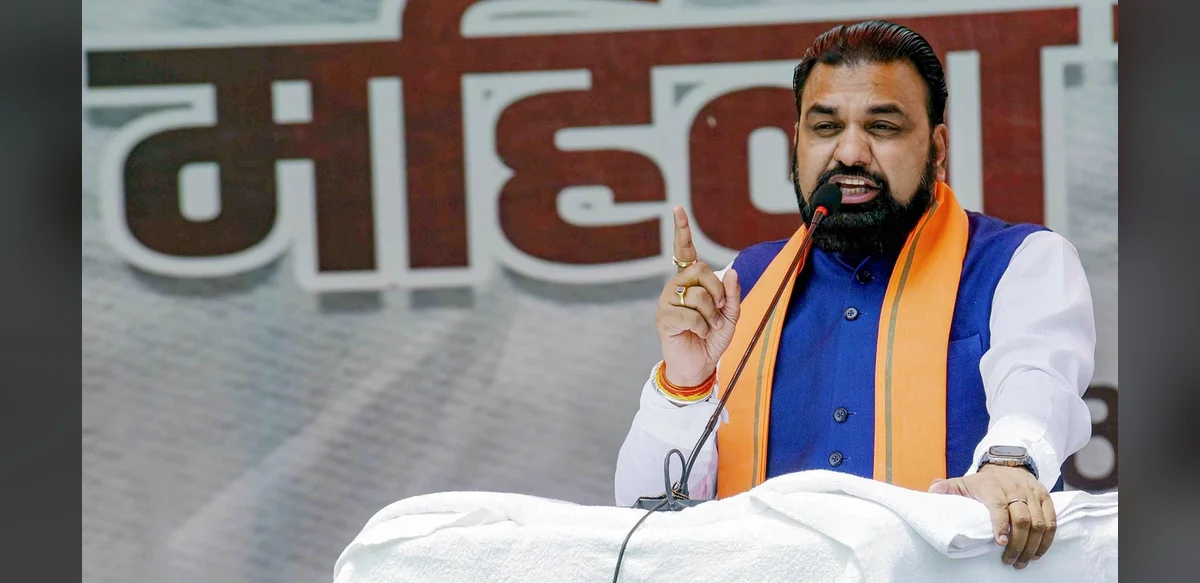
The Bharatiya Janata Party aims to strengthen support among non-Yadav Other Backward Classes in Bihar and neighboring Uttar Pradesh by promoting OBC leader Samrat Choudhary from deputy chief minister to chief minister. Despite the growing influence of OBCs in Indian politics over recent decades and the BJP’s ability to combine non-Yadav OBC voters with its core upper-caste supporters, upper castes still hold more chief minister positions in the Hindi-speaking states.
Currently, among the 10 states in this region, there are five upper-caste chief ministers, three from OBC backgrounds, and two from tribal communities (Scheduled Tribes). Of these, four upper-caste leaders, all three OBCs, and one tribal chief minister belong to the BJP. The two chief ministers not from the BJP are Congress’s Sukhvinder Singh Sukhu, an upper-caste Rajput in Himachal Pradesh, and Jharkhand Mukti Morcha’s Hemant Soren, a tribal leader.
Among the 11 deputy chief minister positions in these states, six are held by upper castes (including Rajput, Brahmin, and Bhumihar), three by OBCs, and two by Scheduled Caste members. Two deputy chief ministers (one Yadav and one Bhumihar) are from the Janata Dal (United) in Bihar, one Brahmin is from Congress in Himachal Pradesh, and the others are BJP members (from OBC, Brahmin, Scheduled Caste, and Rajput groups).
The BJP’s Uttar Pradesh chief minister, Yogi Adityanath, and Uttarakhand’s Pushkar Singh Dhami are both from the upper-caste Thakur group. Rajasthan’s Bhajan Lal Sharma is a Brahmin, and Delhi’s chief minister position is held by Rekha Gupta from the Vaishya community.
The party’s OBC chief ministers include Mohan Yadav in Madhya Pradesh, Nayab Singh Saini in Haryana, and Choudhary in Bihar. Choudhary, the BJP’s first chief minister in Bihar, took over from Janata Dal (United)’s Nitish Kumar, also from a backward class. The BJP’s tribal representative, Vishnu Deo Sai, leads Chhattisgarh.
Patterns from the past
When the BJP gained central power in May 2014, the Hindi heartland had five upper-caste chief ministers, including three from Congress and two from the BJP. The three OBC chief ministers were the BJP’s Shivraj Singh Chouhan in Madhya Pradesh, Janata Dal (United)’s Nitish Kumar, and Samajwadi Party’s Akhilesh Yadav in Uttar Pradesh. Jharkhand had one tribal chief minister, while Delhi was under President’s Rule from February 2014 to February 2015 after Arvind Kejriwal, an upper-caste leader, stepped down.
At that time, Congress had Thakur chief ministers in two mountainous states: Harish Rawat in Uttarakhand and Virbhadra Singh in Himachal Pradesh, plus a Jat (general category) leader, Bhupinder Singh Hooda, in Haryana.
The BJP then had two Rajput chief ministers: Vasundhara Raje in Rajasthan and Raman Singh in Chhattisgarh.
Shifts after 2014
The BJP grew its influence in several states starting in 2014. In Uttar Pradesh, it selected Adityanath to replace Akhilesh. Currently, its two deputy chief ministers are Keshav Prasad Maurya, an OBC, and Brajesh Pathak, a Brahmin.
Following Hooda’s defeat in Haryana, the BJP chose Manohar Lal Khattar, a Punjabi Khatri, as chief minister. In March 2024, it replaced Khattar with Saini to unify non-Jat and OBC support.
After Congress ousted the BJP in Rajasthan in 2018, it named OBC leader Ashok Gehlot chief minister for a third term. But when the BJP regained control in 2023, it appointed newcomer Sharma as chief minister. To appeal to other key castes, it named Diya Kumari, a Rajput, and Prem Chand Bairwa, a Dalit, as deputies.
In Chhattisgarh, Rajput leader Raman Singh was followed by Congress’s Bhupesh Baghel, an OBC. Upon returning to power in 2023, the BJP elevated tribal leader Sai to the top role but maintained balance by appointing Arun Sao, an OBC, and Vijay Sharma, a Brahmin, as deputies.
In Madhya Pradesh, the current deputy chief ministers are Jagdish Devda, a Dalit, and Rajendra Shukla, a Brahmin.
In Bihar, the choice of deputy chief ministers Bijendra Prasad Yadav and Vijay Kumar Choudhary—both from ally Janata Dal (United)—shows careful social alignment: Yadavs form the core support of the opposition Rashtriya Janata Dal, while Choudhary represents the Bhumihar community.

