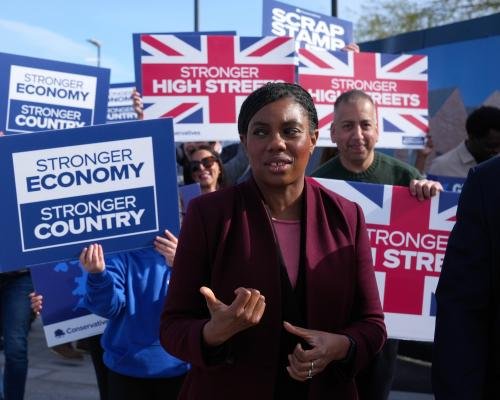
The Conservative Party plans to bring back the restriction on child benefits for families with more than two children, redirecting the resulting savings toward a substantial boost in defense expenditures. Party leader Kemi Badenoch described this as the most extensive non-wartime military buildup in Britain’s history. At a defense event in London, she highlighted the UK’s inadequate preparation for potential conflicts, as revealed by recent global developments. Badenoch emphasized the need for Britain to reclaim its status as a major international player. She promised that, if elected in the upcoming general vote, the Conservatives would achieve the greatest net growth in British military personnel since World War II. This would include adding 6,000 regular troops and 14,000 reserve members. The party estimates it could generate £20 billion for this initiative by reimposing the benefit limit and shifting funds from environmental sustainability efforts. Badenoch stated that the UK must prepare for threats beyond the ongoing Middle East situation and build necessary capabilities for emerging challenges. She stressed the importance of strengthening the military to enhance Britain’s global influence and called for a historic rearmament effort during peacetime. Labour has accused Badenoch of hastily suggesting UK involvement in Donald Trump’s conflict with Iran, which has escalated into a broader international issue that the US president has found difficult to resolve. Regarding the strained UK-US alliance, due to Prime Minister Keir Starmer’s reluctance to engage offensively, Badenoch expressed concern over Trump’s open criticisms of the UK leader. She noted that such public statements are troubling because they are observed not only by domestic audiences but also by adversaries like Iran, China, and Russia. This, she argued, signals a erosion of Western unity that should be prevented. Starmer has justified restricting UK participation in the Iran conflict to protective measures, denying US requests to use British bases for extensive strikes. He maintains that this approach serves the country’s best interests, following US-Israeli actions against Tehran and Iran’s responses targeting US partners in the Gulf region. The Labour administration has pledged to allocate 2.5% of GDP to defense by 2027, rising to 3% in the following term. However, it faces calls to release a detailed defense budget outline, initially promised last fall, amid reported disputes between defense officials and finance authorities. Labour officials claim they inherited a legacy of insufficient funding from the prior Conservative regime, accusing it of weakening the military. Defense budgets under the Conservatives dropped 22% from 2010 to 2017 but increased gradually afterward, now matching 2010 figures.