


N. Gopalaswami, a former Chief Election Commissioner, is recognized for eliminating booth capturing in Bihar through strict measures against election-related violence. Prior to his role at the Election Commission of India starting in 2004, he served as Union Home Secretary, a position typically assigned to highly trusted civil servants by the governing party. At that time, the BJP-led coalition held power in New Delhi, with L.K. Advani as Union Home Minister.
In 2013, while observing presidential elections in the Maldives, Gopalaswami shared his Bihar strategy during an informal discussion: deploying external forces, removing local police, recording activities at every polling station, and authorizing immediate use of force against disruptions.
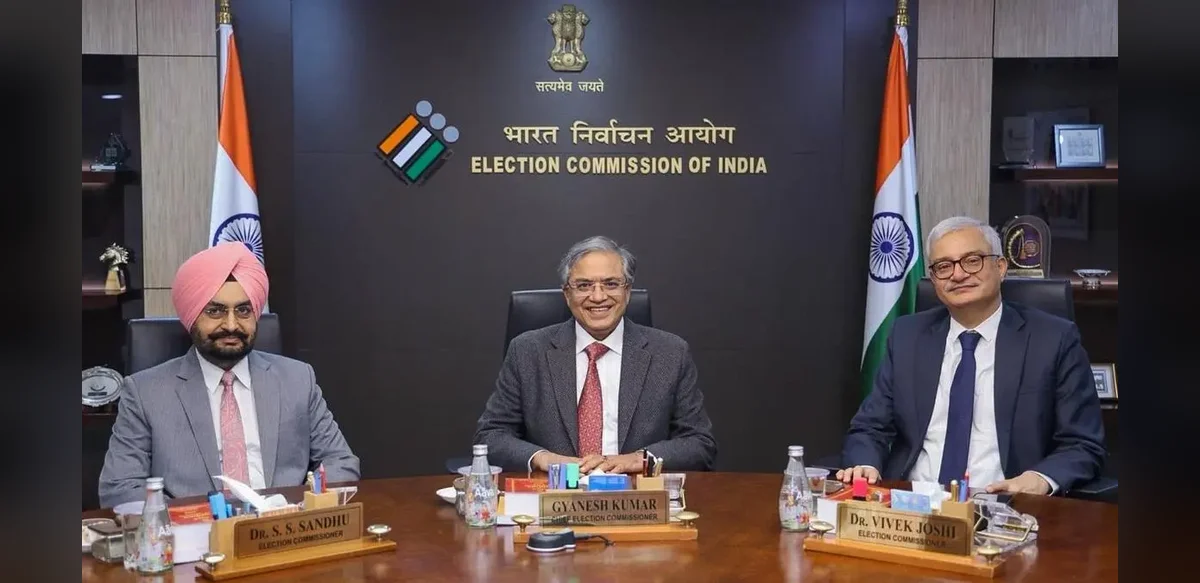
Current Chief Election Commissioner Gyanesh Kumar appears to pursue a comparable approach. For the initial phase of West Bengal’s Assembly elections, he deployed 2,407 companies of Central Armed Police Forces, amounting to about 250,000 personnel—roughly one per 30 voters.
However, West Bengal has not historically been viewed as prone to booth capturing or electoral issues to the same extent as Bihar. A supporter of the Trinamool Congress, Shuvankar Mukherjee, commented on social media that the deployment exceeded the forces used by British authorities to reclaim an independent region in the past.
Kumar seems to regard West Bengal under Trinamool Congress governance as a chaotic area similar to Bihar. A statement from his office on April 20 declared that the Election Commission would ensure elections in the state are conducted freely, fairly, and transparently, without fear, violence, inducements, fake votes, booth interference, or other disruptions. He stressed that no state employees would be permitted to affect the voting process.
This enthusiasm appears inconsistent when examining Kumar’s actions in other states facing elections. The rushed Special Intensive Revision of electoral rolls created significant strain for officials in West Bengal, Tamil Nadu, Kerala, and Puducherry, leading to some suicides. A retired senior civil servant who led the Census noted that such revisions should occur annually, not hastily before polls.
Legal challenges from several states remain unresolved in the Supreme Court. For West Bengal, the court mandated inclusion of all verified voters up to April 21. Yet, this came late; the first updated list post-review on April 21 reinstated only 136 of 2.7 million deleted names. Sources indicated tribunals handled 138 cases, approving 136 for voting. Leaders from the Trinamool Congress, including Mahua Moitra, highlighted that tribunals were inactive in the days before the deadline.
Another issue involves widespread transfers of officials prior to elections, unprecedented in post-independence India. These actions targeted two states led by opposition parties: West Bengal and Tamil Nadu. In West Bengal, transfers of the Chief Secretary, Home Secretary, Director General of Police, and Kolkata Police Commissioner occurred shortly after the election announcement on March 15. In Tamil Nadu, initial moves affected some District Collectors, followed by the State Chief Secretary and a senior police official. Days before voting, the intelligence chief was replaced. The Commission barred the transferred officials from election duties until polls concluded, despite their roles being unrelated to elections.
A former Chief Secretary explained that upon election announcement, control shifts to the Chief Electoral Officer, making involvement of other top officials irrelevant. Additionally, the Chief Election Commissioner convened an unusual meeting with Chief Secretaries of all states in elections shortly after the schedule was released. A current official described this as uninformed about standard election procedures in India.

