


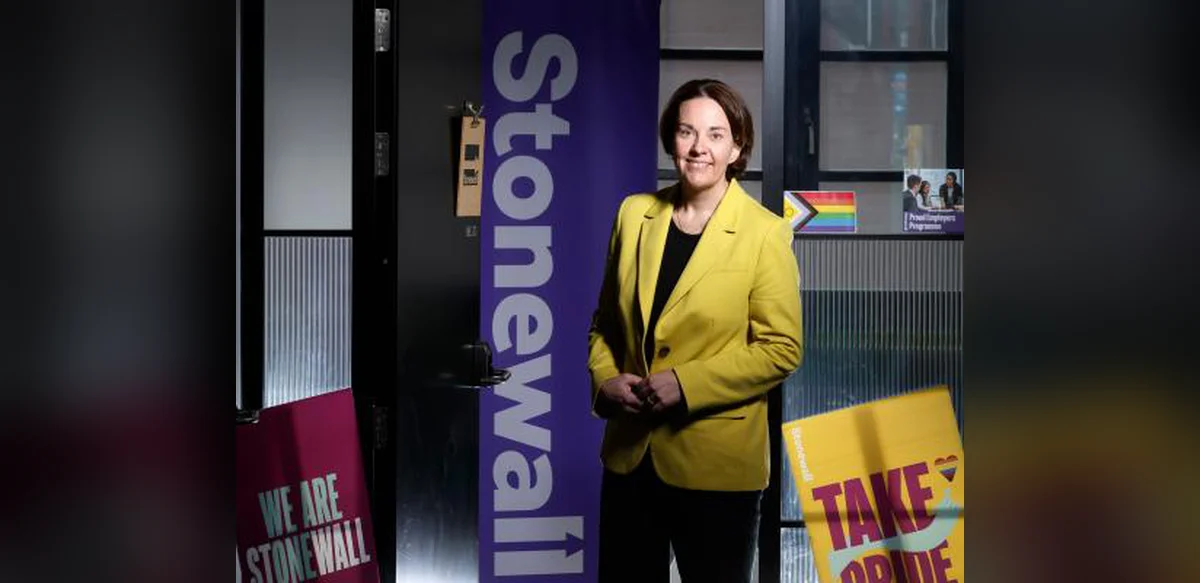
Kezia Dugdale, previously the head of Scottish Labour, has expressed significant concern about her safety as a lesbian in the UK, noting increased hesitation to hold her wife’s hand publicly. In an interview with the Guardian in Edinburgh, coinciding with her naming as chair of the LGBTQ+ organization Stonewall, she warned that advances in gay rights might regress amid growing right-wing populism. She emphasized that protections like same-sex marriage should not be assumed secure.
Dugdale pointed to examples such as Italy, where LGBTQ+ protections have diminished rapidly, often tied to debates on family values, suggesting a similar reversal could occur in the UK. She served as Scottish Labour leader from 2015 to 2017 and will begin her volunteer role at Stonewall in six months.
Her appointment follows a challenging phase for Stonewall, which saw its revenue drop by over half and required substantial staff cuts, largely due to its firm stance on transgender issues. Detractors claimed the group promoted an aggressive agenda on trans rights, insisting on unrestricted access for trans women to female-only areas like prisons, hospitals, sports, and shelters, despite worries over security and equity.
Dugdale’s leadership signals a potential shift, as she admitted past errors by the organization and commended author JK Rowling, who has drawn criticism from trans advocates. When questioned about perceptions that Rowling’s views have been harsh and exclusionary toward trans individuals, Dugdale acknowledged those feelings but also noted the intense backlash faced by Rowling and others with differing opinions. She stressed the need to move beyond polarized debates.
Highlighting Stonewall’s updated approach, Dugdale described it as focused on managing challenges through dialogue and collaboration. She recognized the presence of around 2,000 LGBTQ+ groups nationwide, each with unique focuses, and positioned Stonewall to influence policy in decision-making circles while fostering inclusive environments.
Dugdale admitted that organizations sometimes err and that, in retrospect, different choices might have been made. She underscored the importance of safe spaces for discussing complex topics. The goal, she said, is persuasion rather than rigid positions, embracing nuanced areas to build agreement and advance progress.
She revealed personal losses, including friendships strained by her advocacy for trans rights, lamenting the divisive national discourse on gender issues. Within the Labour movement, she has differed from longtime allies on these matters, regretting some of her past rhetoric that widened divides.
Regarding Rowling’s stance against certain trans rights measures, Dugdale expressed admiration for her achievements as a bestselling children’s author who rose from single motherhood in Edinburgh. She praised Rowling’s efforts in supporting single parents and addressing poverty and inequality, affirming her value in public discourse.
Dugdale advocated for compassion, openness, and calm discussions to identify shared interests, viewing this as the route to resolution. She endorsed the Scottish government’s proposed changes to gender recognition laws, which sought to streamline the process for legal gender changes, including for those aged 16 and 17, advancing toward self-identification.

