


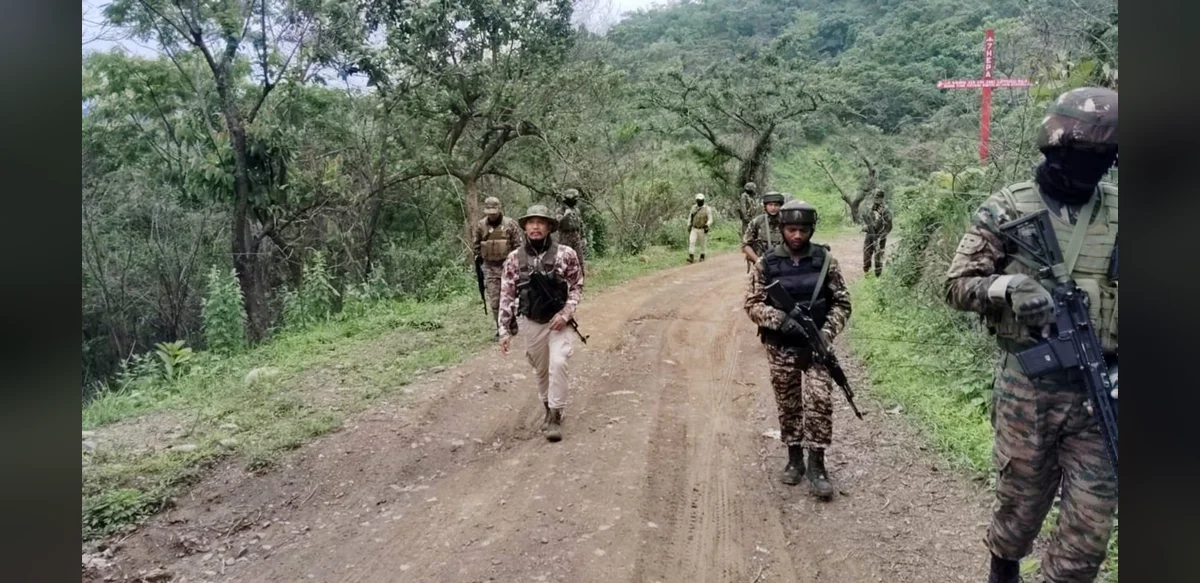
A hostage situation involving six missing Naga men reportedly taken by armed Kuki groups in Manipur’s Kangpokpi district is ongoing. Security officials are examining how the state’s Meitei-Kuki conflict has evolved into a Naga-Kuki confrontation. Agencies link the escalation to territorial claims, political motives and changes in illegal drug routes.
On May 13, after three church leaders were killed, clashes broke out between Kuki and Naga communities. Dozens of villagers from both sides were abducted in Kangpokpi and Senapati districts. Following negotiations, each side freed 14 captives. Naga groups in Senapati still hold 14 people, seeking the return of six missing individuals. Kuki groups state all hostages have been released.
With the six Naga men unaccounted for after nine days and 14 Kuki men remaining captive, the state is tense. Road blockades have stranded hundreds of trucks and disrupted daily activities.
Officials note long-standing tensions rooted in 1990s clashes. Recent factors such as territorial competition, altered smuggling paths and political goals have intensified divisions.
What started as a February brawl in Ukhrul district has grown into broader armed ethnic conflict between Nagas and Kukis. Violence that began in the Litan-Sareikhong area spread to Ukhrul, Kangpokpi and Kamjong districts near the Myanmar border. Armed groups became involved, leading to abductions and attacks.
After a pause, organised incidents resumed in March. On March 11, 21 Naga passengers were reportedly seized near Mongkot Chepu and freed the next day. The same day, two Kuki men were found dead in Kamjong forest. Further clashes occurred later in March and April, with gun battles and arson reported in several Ukhrul villages. Each community accused the other of starting attacks.
In early May, assaults reached Tangkhul Naga villages near the Myanmar border in Kamjong district. The Kuki National Army-Burma was suspected. The incidents marked a geographic shift and possible involvement of Myanmar-based militants, raising concerns about cross-border coordination.

