


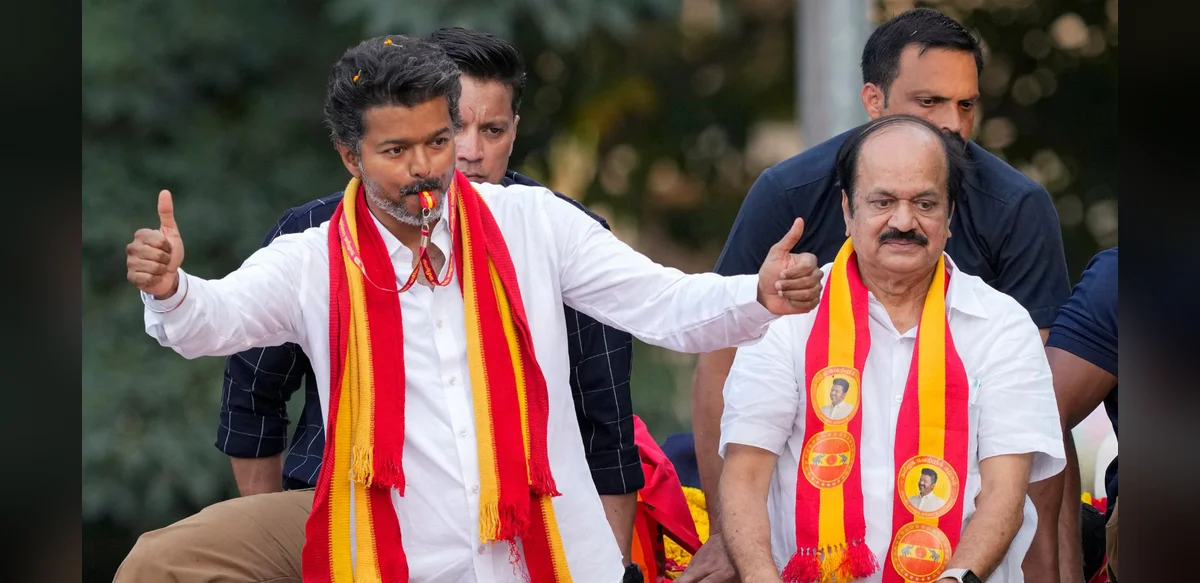
Voting commenced in Tamil Nadu on Thursday, with the Election Commission noting an approximate 70% participation rate by 3 p.m. Standard scenes included long lines at the start, political groups encouraging turnout, and security personnel stationed at educational facilities used as voting sites.
However, a fresh element emerged in this election: the involvement of actor-turned-politician Vijay, adding a new dynamic to the race. The incumbent DMK approached the vote with perceived advantages from its time in office, effective social programs, a strong coalition, and control of state resources. The opposition AIADMK, under Edappadi K. Palaniswami, relied on dissatisfaction with the government and strategic partnerships to challenge that lead.
As the day progressed, discussions frequently centered on Vijay’s potential role. In casual gatherings, online videos, social media, political headquarters, and near voting locations, people debated whether his participation signals the rise of a significant alternative force in a region long controlled by the two main Dravidian parties.
By midday, Chennai’s voter participation varied from about 31% to 39% in different areas, reaching 54.58% by 3 p.m. Higher rates were seen in Virugambakkam and T. Nagar, while Mylapore, Royapuram, and Thiru-Vi-Ka Nagar lagged. Steady activity occurred in Perambur, Kolathur, Anna Nagar, and Villivakkam.
Analysts warned against overinterpreting these figures this year. The state’s 2024 voter list totals around 5.67 crore, a notable drop from 6.24 crore in 2021 due to the removal of duplicate, relocated, or invalid entries.
Consequently, percentage-based turnout might mislead. Actual numbers of ballots submitted could provide a clearer clearer picture. A 73% rate in 2024 differs from the same in 2021. In essence, these metrics may not accurately reflect reality this time.
Allegations of cash distribution for votes persisted, a longstanding practice in the state. Opposing groups claimed widespread payments in the last two days before the election, ranging from Rs 1,000 to Rs 2,000 per person, or up to Rs 3,000 in certain areas, with even higher amounts—reaching Rs 5,000—in key contests. Unconfirmed reports from places like Karur suggested larger sums. In Chennai, such activities seemed sporadic, focused on specific low-income neighborhoods and housing areas rather than widespread.
Rivals accused the TVK of similar limited distributions in locations like Gobichettipalayam, Salem West, and Tirunelveli. The party has not addressed these accusations publicly.
If these claims hold even partially, the operation would represent a massive informal cash program, potentially more streamlined than some official initiatives.
This occurs in a state where the Kalaignar Magalir Urimai Thittam provides Rs 1,000 monthly to qualifying female household heads, costing the administration roughly Rs 1,300 crore each month.
Officials responded by confiscating cash, alcohol, precious metals, narcotics, and giveaways worth over Rs 1,200 crore leading up to the vote.
Vijay attracted considerable attention on voting day. At his polling site in Neelangarai, authorities faced challenges managing enthusiastic crowds eager to approach. Journalists encountered restrictions, voters reported waits, and the scene briefly resembled a major public event.
Comparable excitement surrounded appearances by other prominent actors, Ajith and Rajinikanth, at their voting locations.
Vijay’s importance extends past fame. Observers from various groups view him as a novel prominent figure in recent times, resonating especially with younger demographics. The state has witnessed past challengers like MGR, Jayalalithaa, Vaiko, Vijayakanth, and Kamal Haasan. However, sources indicate Vijay uniquely captures widespread interest among new voters, city residents, and those without prior party ties.
This explains why everyday occurrences—such as buses transporting returning workers, youth traveling from nearby cities or outskirts to participate, and groups assembling—were portrayed online as signs of strong support for Vijay.
A key issue is which established party’s support base TVK might erode. The AIADMK suggests that if Vijay exceeds mid-teens in vote share, it primarily affects the DMK, particularly among young and undecided voters. Conversely, the DMK argues that TVK draws from discontent directed at them, which might otherwise benefit the AIADMK. Both perspectives could hold validity, depending on the context.

