


In a memorable scene from the 1992 Bollywood film ‘Bemisal,’ Amitabh Bachchan’s character tells Rakhee Gulzar’s character that the British identified most of India’s hill stations, except Kashmir, which the Mughals discovered. She praises the Islamic rulers for their exceptional music, paintings, and architecture, and he jokingly adds that their top contribution was Mughlai cuisine.
This clip regained popularity in 2022, with online users criticizing the film industry for promoting anti-Hindu narratives and idealizing foreign invaders. By 2026, The Economist published an article echoing similar sentiments, attributing to the Mughals advancements in language, food, architecture, music, art, and cultural blending, while ironically noting their indirect role in the rise of the Bharatiya Janata Party in 2014.
The Economist’s tweet stated: ‘The Mughals brought language, food, architecture, music, art and syncretism to India. And they brought Narendra Modi’s party to power.’ The piece, titled ‘What have the Mughals ever done for us?’ and subtitled ‘How India’s greatest Muslim empire built its most powerful Hindu party,’ appeared on April 19, celebrating the Muslim dynasty’s enhancements to India—a civilization with millennia of history, economic prosperity, scientific and artistic accomplishments, literature, and social traditions predating Mughal influence.
Babur, the empire’s founder, was attracted to India’s riches after displacement from his homeland in Ferghana, now in Uzbekistan, due to family disputes and military defeats. Like other invaders, including Islamic forces and European colonizers, they targeted India’s renowned wealth for exploitation and sought to convert locals.
The article argues that the Mughals, as the most enduring of these rulers, marked their 500th anniversary since the Battle of Panipat on April 21, where Babur defeated Delhi’s last sultan. Descended from Tamerlane and Genghis Khan, the Mughals built a wealthy and influential empire, adopting Indian royal customs, intermarrying locally, and integrating into Indian society unlike the British.
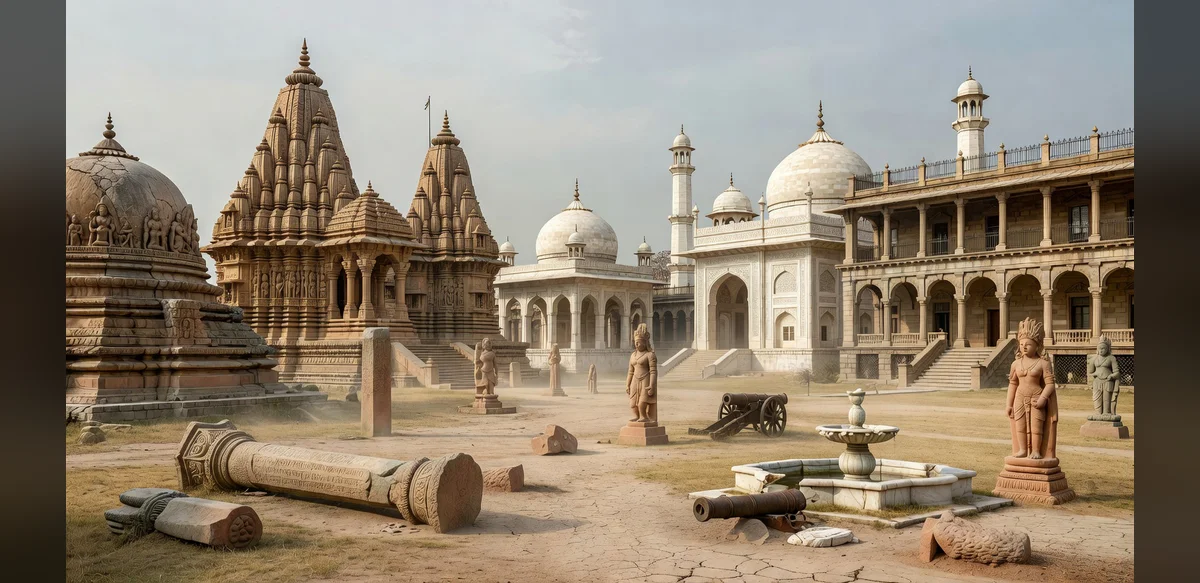
Their prosperity stemmed from controlling Indian lands they had conquered over centuries. They built upon existing traditions, using local labor and materials to create structures presented as examples of cultural fusion.
Unable to return home due to ongoing rejections, they stayed in India by necessity. Babur’s remains were later moved to Kabul per his wishes, indicating his true attachment to that region.
While left-leaning groups often denounce invasions, they sometimes overlook or justify those against India or Hindus, as reflected in this article. The Economist mocked Prime Minister Narendra Modi for highlighting India’s past foreign dominations.
The publication acknowledged Mughal temple destructions but argued this should not tarnish their legacy. It omitted mentions of jizya taxes, Hindu massacres, and forced conversions documented by the rulers themselves.
Critics who highlight minor events as offenses against Muslims do not view attacks on Hindu sacred sites similarly, implying such actions should not be seen as insults to the faith, thereby downplaying anti-Hindu behaviors.
The article then posed: ‘They took everything India had. And what, the ideology asks, did they ever give us in return?’ It proceeded to praise Mughal influences on language, noting that Persian words entered Indian languages through them, as explained by historian Richard Eaton, who observed that a quarter of words in a sample quote originated from Persian via Mughal introduction.

