


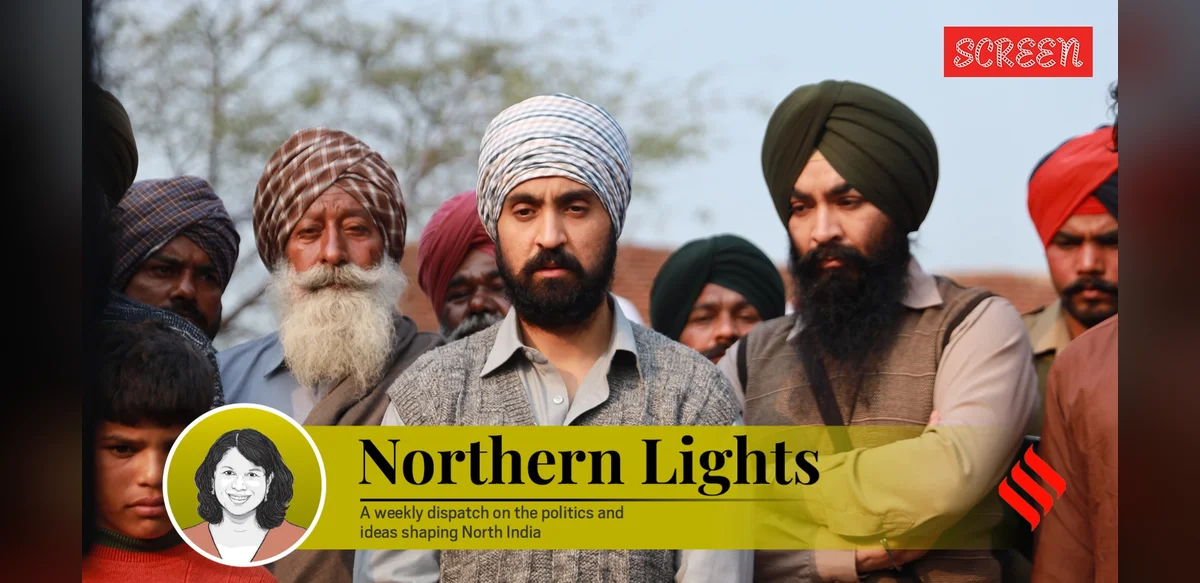
The film Satluj appeared and vanished from the ZEE5 platform within two days, returning Punjab’s difficult period to public discussion. In the Majha border region, which endured both militancy and police operations, older residents still describe that era with the Punjabi term Santaap, or suffering. This enduring memory, rather than any movie, suggests Punjab will not revisit those times.
Militancy arose in Punjab not from a single film, speech, leader or incident. It developed over years from accumulated political grievances. The 1966 state reorganisation left disputes unresolved, including river water sharing, Chandigarh’s status and demands for greater autonomy. These issues did not immediately cause violence but fostered alienation.
The situation deteriorated through political and administrative errors. The 1978 Nirankari clash in Amritsar killed 13 Sikh protesters led by Jarnail Singh Bhindranwale, with the accused later acquitted. This event elevated Bhindranwale, head of the Damdami Taksal seminary.
Subsequent killings included the 1980 assassination of Nirankari leader Gurbachan Singh and the 1981 murder of Punjab Kesari editor Lala Jagat Narain. Bhindranwale was suspected in both cases but released. The Congress government under Indira Gandhi sought to use him against the Shiromani Akali Dal, which had opposed the Emergency.
Bhindranwale soon acted independently, establishing a parallel authority from the Golden Temple after moving there with armed followers in 1982. Weakened Akali leaders joined him in the Dharam Yudh Morcha for greater Punjab autonomy.
Failed talks between the Centre and Akalis led to further escalation. The 1983 killing of DIG A S Atwal outside the complex, Operation Blue Star in June 1984 with heavy casualties and damage to the Akal Takht, Indira Gandhi’s assassination and the anti-Sikh riots turned the crisis into full insurgency.
Personal grievances also played a role. Maj Gen Shabeg Singh, dismissed from the army on disputed charges, aided fortification efforts. Gurbachan Singh Manochahal, later a militant leader, faced similar dismissal.
Once violence began, arms and support arrived from across the border. The following years brought assassinations, bombings and restrictions, while counter-insurgency faced excess allegations. Many traders left, and ordinary residents suffered as some promoted Khalistan with external backing.
The Diljit Dosanjh film Satluj, drawn from human rights activist Jaswant Singh Khalra’s life, covers only part of the story. Khalra, an Amritsar activist, began his work after discovering a colleague’s body among unclaimed cremations. Registers revealed around 2,000 such cases, with families still seeking answers.

