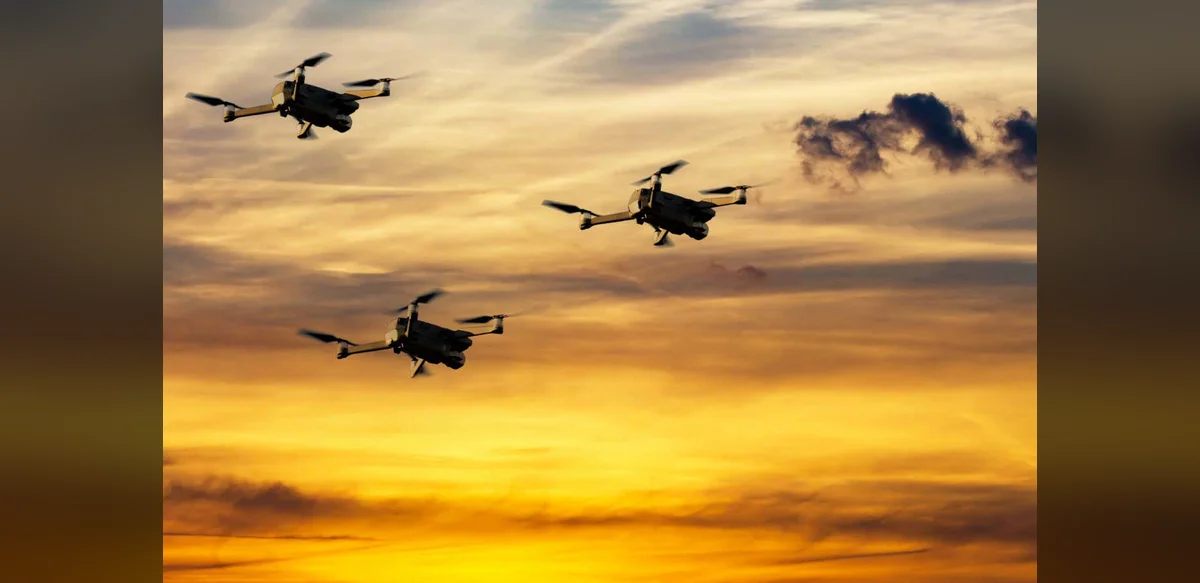
A senior Ukrainian defence industry official informed New Scientist that a trial occurred two years earlier using fully autonomous drones programmed to eliminate any targets within a designated zone, resulting in verified deaths. Drones frequently appear in Ukraine combat zones but are typically operated by human pilots. Fully autonomous drones operating without human supervision have caused soldier fatalities on the battlefield for the first time. This development, reported by a senior Ukrainian defence figure, represents a significant shift in military practices. The single test deployed ten AI-operated Terminator drones along the Ukraine front line, leading to Russian soldier casualties. Drone manufacturer Alexander Kokhanovskyy, who provided the technology, confirmed the trial to New Scientist during an embassy-hosted press event. The event happened two years ago and featured quadcopter drones directed to advance toward the front, travel three to five kilometres in roughly ten minutes, then activate Terminator mode where an AI system identifies and strikes targets. Kokhanovskyy stated that the drones are launched with the expectation that all detected entities in the area will be eliminated, noting the complete absence of any connection or video feed. Human-piloted drones later surveyed the zone to assess outcomes, confirming deaths including several soldiers and one truck. Kokhanovskyy indicated the test was conducted by an unnamed military unit near Bakhmut and Chasiv Yar during a Ukrainian counteroffensive. The Ukrainian Ministry of Defence has not commented on the trial or related legal policies. AI applications are widespread in global militaries for target selection and weapon functions, yet human oversight has remained standard. This report provides the clearest indication yet of battlefield deaths caused solely by AI systems. Ukraine currently prohibits AI use in the final target interception phase, though it supports earlier process stages. Officials are discussing potential adjustments to these restrictions amid advancing AI capabilities. Earlier 2023 reports noted Ukrainian AI-equipped drones attacking vehicles autonomously, but without confirmed human casualties. No global treaty bans autonomous lethal weapons, though the UN Secretary-General has advocated for such a prohibition. Concerns include potential violations of humanitarian and human rights laws, risks of errors, friendly fire incidents, and civilian harm. Many nations are advancing systems that automate portions of target engagement. The US employs software for data analysis and target selection, theoretically requiring human approval before strikes. Claims also exist regarding development of independent flying and naval drones. A 2021 UN report suggested possible autonomous use of Turkish Kargu-2 drones in Libya the prior year, though details on injuries or deaths remain unspecified.