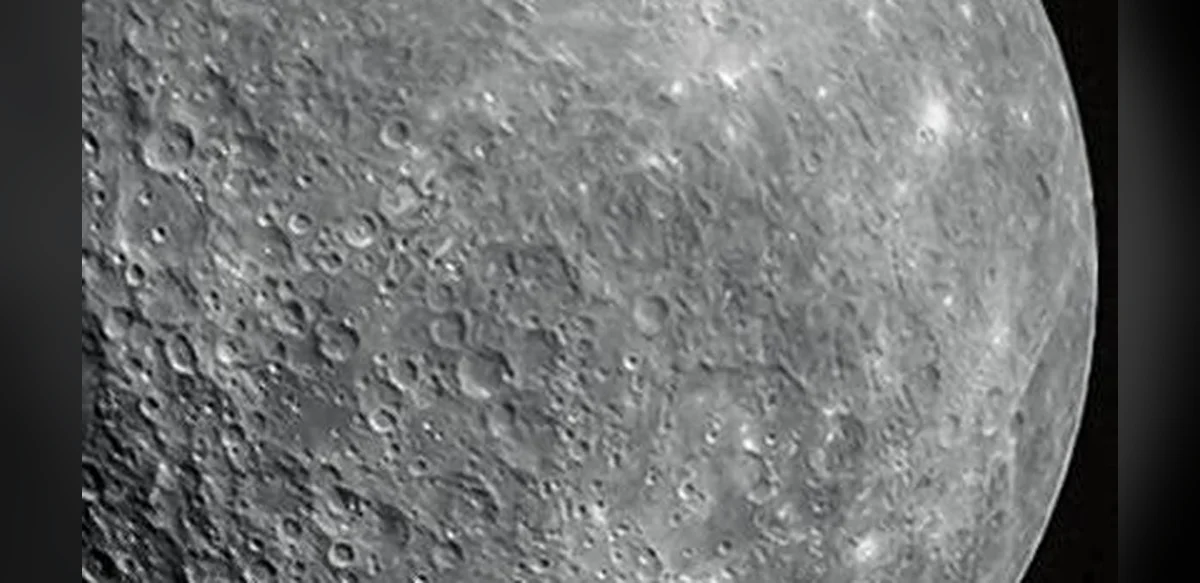
Nearly six years after launch, India’s Chandrayaan-2 mission continues to deliver useful information about the Moon. Researchers at the Physical Research Laboratory have reported possible subsurface ice in the lunar south polar area. The results come from data collected by the orbiter’s Dual Frequency Synthetic Aperture Radar. The team examined doubly shadowed craters inside permanently shadowed regions. These sites stay extremely cold, around 25 kelvin, because sunlight and heat never reach them, making them good places for water ice to remain stable over long periods. Radar analysis revealed signals that match the expected pattern for ice beneath the crater floors in four locations. Scientists noted that a circular polarization ratio above 1 combined with a degree of polarization below 0.13 points to scattering from subsurface ice rather than surface rocks. One 1.1-kilometre crater inside Faustini showed especially clear signs, including a lobate rim shape that may indicate the impact reached buried ice. The findings could help map lunar polar resources and support planning for future landings and resource use. Chandrayaan-2 launched in July 2019. Although contact with the Vikram lander was lost during descent, the orbiter remains operational and continues to collect data with its eight instruments, including the radar payload.