


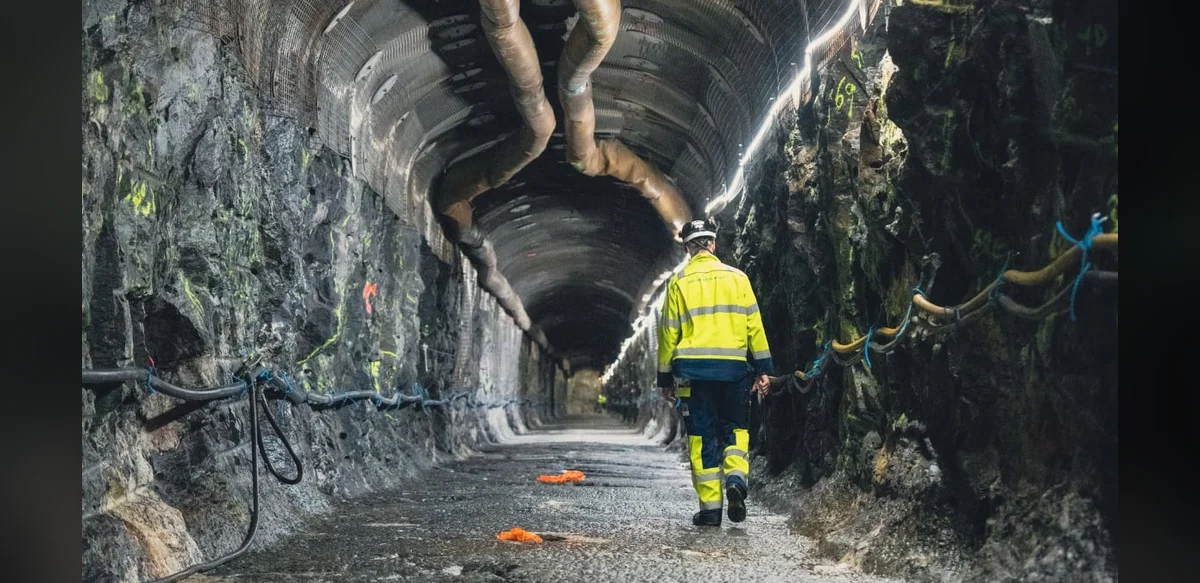
The elevator stops at a depth of 433 meters. Doors open to reveal the entrance of what is set to become the world’s first permanent storage site for spent nuclear fuel.
Carved into 1.9 billion-year-old stable rock in Eurajoki, southwest Finland, the facility known as Onkalo is almost ready for use. Nations have struggled since the 1950s to manage radioactive nuclear waste, most of which remains in temporary storage.
Similar projects are underway in Sweden and France, yet Finland is expected to become the first to begin underground operations. The Finnish Radiation and Nuclear Safety Authority plans to issue its final assessment in June, after which an operating license may be approved.
Nuclear operator Teollisuuden Voima Oyj aims to begin depositing waste by the end of this year or early next year. The material, currently held in water pools at the nearby Olkiluoto plant, will be placed in holes drilled into the bedrock, where it will stay radioactive for thousands of years.
Onkalo can hold 6,500 tons of uranium and is designed to serve Finland’s five reactors. Construction started in 2004 at an estimated cost of one billion euros.
Spent fuel is scheduled to be stored in the tunnels for about 100 years, after which the site will be sealed for at least 100,000 years. Above ground, the fuel will be placed in corrosion-resistant copper canisters, lowered into the holes, and surrounded by bentonite clay.
Long-term safety assessments consider risks such as canister corrosion and potential earthquake damage during future ice ages. While some local opposition existed in earlier decades, public support for nuclear power in Finland now stands at a record high. The Finnish Association for Nature Conservation continues to express concerns about long-term safety.
Under Finnish law, all nuclear waste produced domestically must remain in the country.

