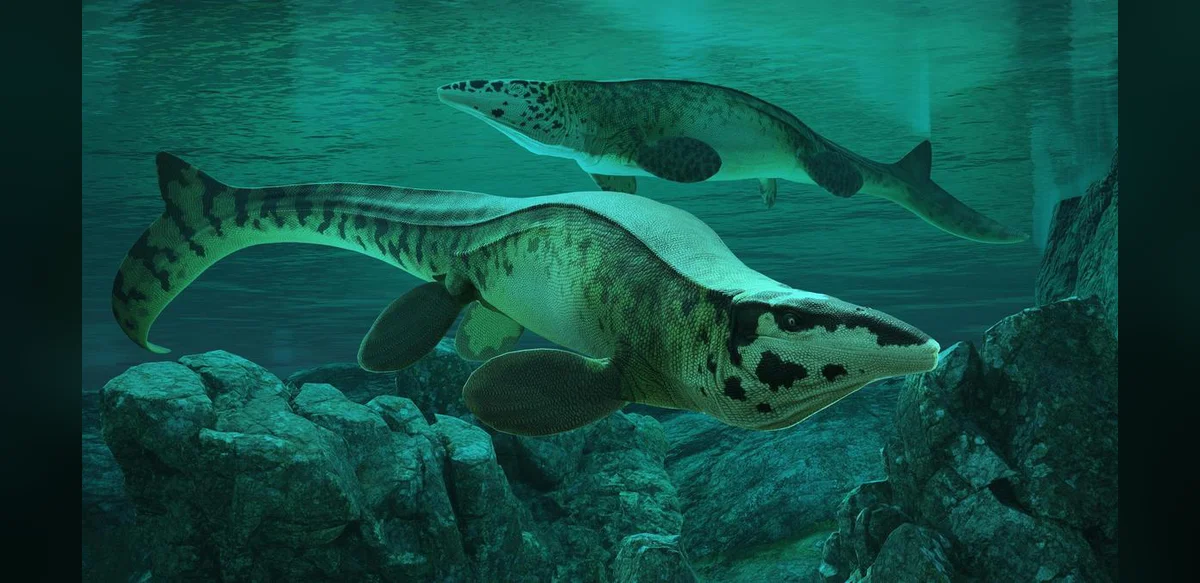
Tyrannosaurus rex was a dominant land predator near the end of the dinosaur era. Yet another fearsome creature, the marine reptile Tylosaurus rex, matched its size and aggression during the Cretaceous Period. Researchers have now confirmed Tylosaurus rex as a separate species following detailed analysis of known fossils. Identification relied on its massive body, serrated teeth suited for slicing flesh, strong jaw and neck muscles for capturing large prey, and additional skeletal features. About 80 million years ago, Tylosaurus rex inhabited an inland sea dividing North America, while Tyrannosaurus rex lived on land roughly 66 million years ago. The marine form featured a streamlined shape, long snout with large teeth, four flippers, and a strong tail. The genus Tylosaurus has been recognized since the 19th century, with several species known including Tylosaurus proriger. The largest Tylosaurus rex specimen, called Bunker and housed at the University of Kansas museum, measures about 13.2 meters, exceeding the 12.2-meter length of the notable Tyrannosaurus rex fossil Sue. Bunker was previously classified as Tylosaurus proriger but shows traits unique to the new species. Lead author Amelia Zietlow noted the skull reaches 1.7 meters. Tylosaurus rex belonged to mosasaurs, globally distributed marine reptiles that became top ocean predators in the final 30 million years of the dinosaur age. Its closest living relatives may include monitor lizards such as the Komodo dragon. Co-author Ron Tykoski stated it would have been twice the length of modern great white sharks. Most fossils come from Texas, though Bunker was found in Kansas. The species name, meaning king of the tylosaurs, references its dinosaur namesake.