


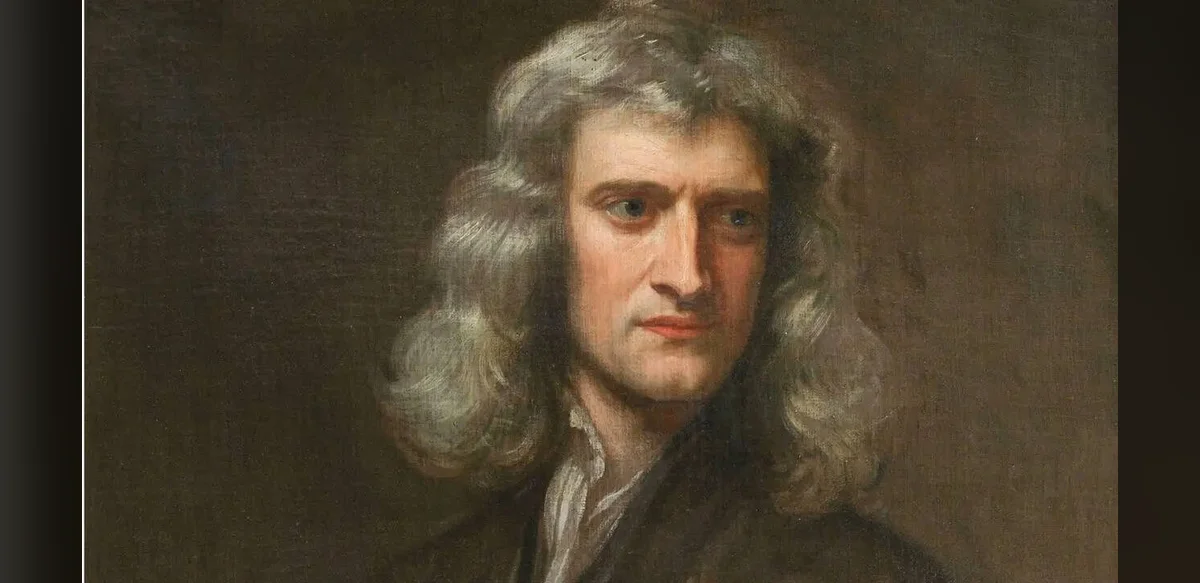
Isaac Newton once wrote that truth is ever to be found in simplicity, and not in the multiplicity and confusion of things. The English physicist and mathematician, born in 1642, is widely regarded as one of history’s most influential scientists. He formulated the three laws of motion and the law of universal gravitation, demonstrating that the force drawing an apple to the ground also governs the moon’s orbit. Newton also helped develop calculus, made key discoveries about light and color, and published the Principia, which reshaped understanding of the physical world.
The quoted line appears in his theological writings on prophecy rather than his scientific texts. Yet the same preference for simplicity runs through his scientific work. In the Principia he advised admitting no more causes than necessary to explain observed phenomena. He repeatedly reduced complex celestial motions to a small set of clear equations.
Newton argued that genuine truth tends to reveal itself as simple at its core. A tangled explanation filled with exceptions often signals that understanding remains incomplete. This view does not imply that discovery is effortless. His own research required sustained effort, but the final insight usually displayed elegance and economy.
The principle can be applied in everyday situations. When an explanation, plan or schedule appears unnecessarily complicated, it may be worth questioning whether the complexity conceals a weaker idea. Attempting to state a matter plainly can reveal whether real comprehension has been reached. Identifying the one or two essential elements in a problem and setting aside the rest often clarifies what truly matters. Clutter in work, finances or routines frequently indicates a need for reduction rather than addition.
Newton left several other well-known statements on the same theme, including the observation that nature is pleased with simplicity and does not affect superfluous causes. He also remarked that if he had seen further it was by standing on the shoulders of giants.

