


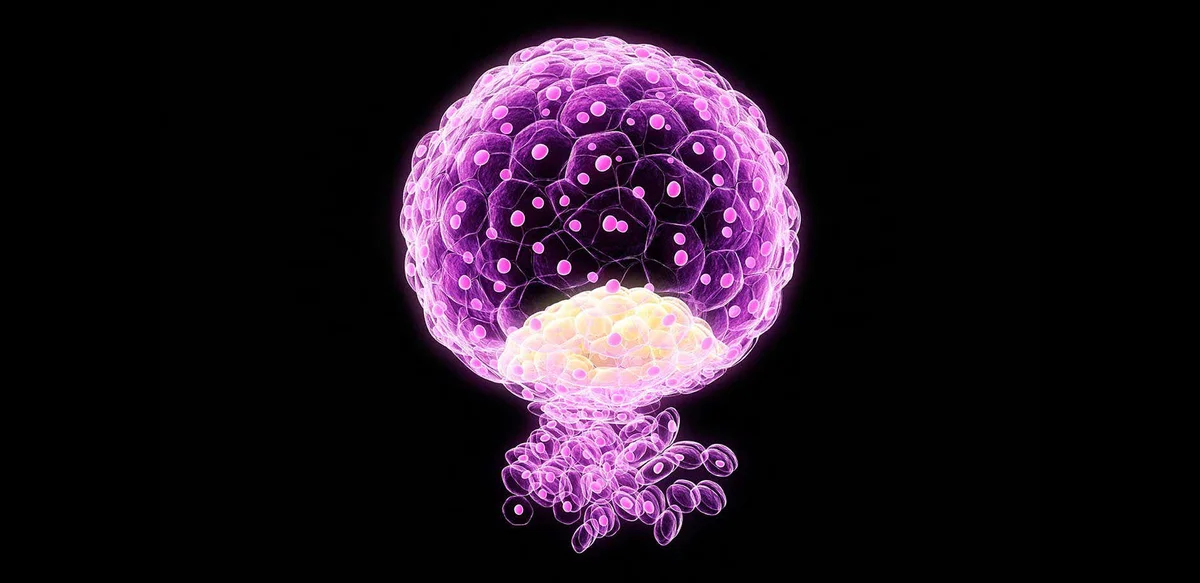
In a Vienna laboratory, cells divide to create a hollow sphere with features of an early human embryo, though it did not originate from an egg and sperm. Instead, it was produced entirely from stem cells in controlled conditions.
The initial stages of pregnancy remain difficult to observe directly inside the uterus, limiting knowledge of why many attempts fail. Embryo models developed from stem cells are now providing new ways to study this process.
Since the first creation of blastoids five years ago, researchers have gained clearer understanding of early development. These models allow experiments on implantation and early growth outside the body, supporting advances in IVF methods and pregnancy-related treatments.
After fertilization, an embryo forms a blastocyst that must attach to the uterine lining around one week later. This implantation step succeeds in only about one-third of natural cases, and roughly 60 percent of IVF transfers do not succeed.
Previous studies relied on animal models or limited human samples from surgeries or miscarriages. Blastoids now enable direct observation of the implantation process using three-dimensional models of the endometrium created from donor tissue.
One team achieved over 80 percent implantation success with blastoids in an artificial endometrium. Another group recorded lower rates with tissue from patients who had multiple IVF failures and identified several approved drugs that improved outcomes in certain samples.
These techniques are helping develop potential treatments to raise IVF success rates while raising questions about ethical limits as models are sustained longer in the lab.

