


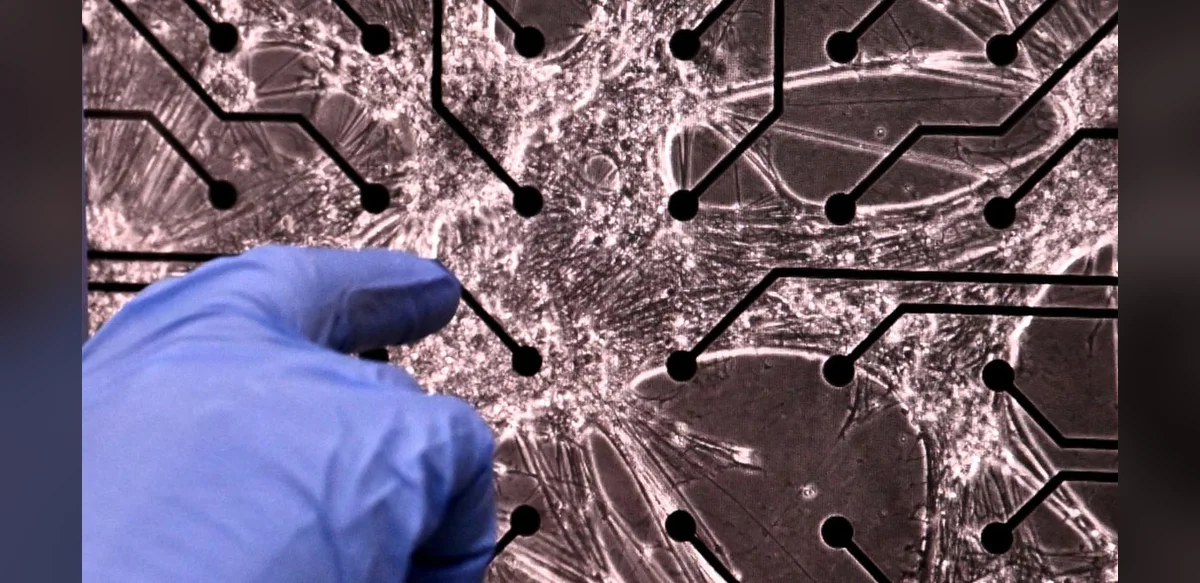
Researchers in Australia have taught clusters of living human brain cells grown on a silicon chip to play the 1990s video game Doom. The team at Cortical Labs says this work shows only the beginning of what such neuron-based systems might accomplish.
The setup uses roughly 200,000 brain cells derived from stem cells obtained through blood donations. After first learning the simpler game Pong, the cells advanced to the more complex three-dimensional environment of Doom.
At the start the neurons behaved like complete beginners, often colliding with walls or firing in random directions, according to senior scientist Alon Loeffler. Over time the cells improved, directing shots more accurately at targets.
The digital game world is translated into electrical patterns that the neurons can detect through electrodes on the CL1 chip. Different patterns of cell activity trigger actions such as moving or shooting. Researchers track these signals on a connected computer and adjust inputs to guide learning.
Beyond games, the chip can be programmed for tasks including drug testing and machine-learning applications. Chief scientific officer Brett Kagan noted that the neural cultures have already been tested in robotics, real-time learning, disease modeling, and personalized medicine.
Kagan described the system as a sustainable form of intelligence that uses far less power than conventional computers. The cells remain viable for about six months and do not yet deliver fully consistent results. Industry observers see potential value in the approach for reducing energy use in computing.

