


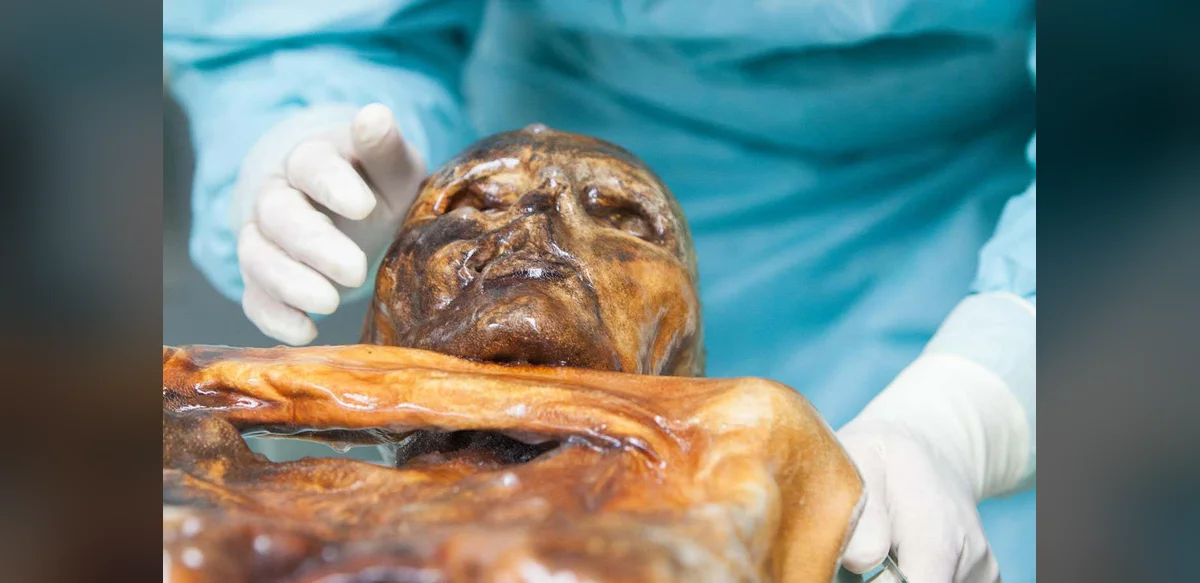
Scientists examining the 5300-year-old mummy known as Ötzi have identified bacteria that lived in his gut during life along with cold-tolerant fungi that colonized his body after death. Some of these microbes may still show metabolic activity despite long-term storage in icy conditions.
Ötzi’s remains were discovered in 1991 emerging from an Alpine glacier near the Austria-Italy border. He lived between 3350 and 3120 BC. Decades of study have shown he had dark skin, was balding, bore tattoos and suffered an arrow wound to the shoulder that likely caused his death.
The mummy is kept at the South Tyrol Museum of Archaeology in Bolzano, Italy, at a constant temperature of -6°C and 99 percent relative humidity to replicate glacier conditions.
Researchers analyzed skin swabs, tissue and thawed water samples collected in 1992, 2010 and 2019. They compared results with soil and ice taken from the discovery site. Ancient gut bacteria such as Treponema and Kineothrix were found inside the tissues, while Pseudomonas appeared throughout. External samples revealed psychrophilic yeasts including Glaciozyma, whose rising abundance and reduced DNA damage suggest possible ongoing activity.
The findings indicate Ötzi hosts a complex microbial community shaped by his original gut flora, later environmental organisms and decades of conservation treatment. Regular genomic monitoring is recommended to track any changes.

