


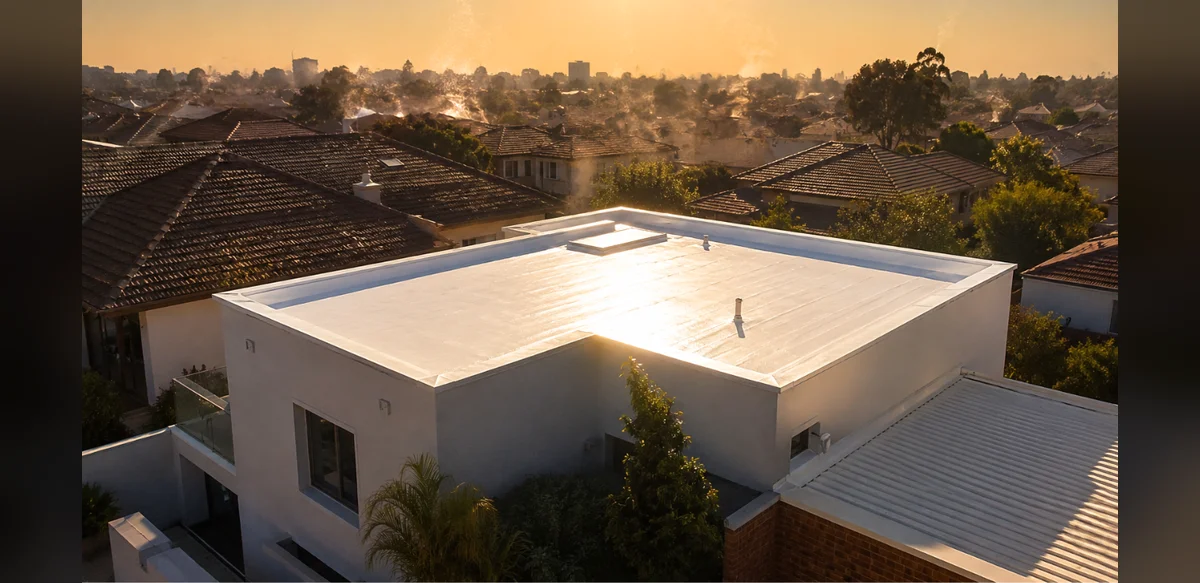
As heatwaves grow more frequent and severe globally, researchers seek methods to cool structures without raising energy use. Scientists at the University of Sydney, collaborating with Dewpoint Innovations, created a nano-engineered layer that bounces back as much as 97 percent of sunlight while staying much cooler than standard materials. This experimental coating aims to cut heat gain, reduce indoor warmth and ease demand for air conditioning. It also gathers humidity from the air and converts it into water drops with no power required.
The layer relies on a custom polymer called PVDF-HFP filled with tiny pores that scatter sunlight and limit heat uptake. Unlike ordinary surfaces that soak up solar energy and warm up, the material sends most rays away and releases heat outward through passive daytime radiative cooling, keeping areas cooler even in full sun.
Many existing cool-roof products use pigments for reflection, yet this version employs a porous nano design that reaches higher reflectance levels. Tests in labs and outdoors confirmed up to 97 percent sunlight reflection. In some cases coated areas stayed over 25 degrees Celsius cooler than dark roofs under identical conditions, and surfaces could remain up to 6 degrees Celsius below air temperature.
The goal is to limit heat entering buildings via roofs and walls, lowering indoor readings and cutting air-conditioner and fan use in hot spells. Though not a full substitute for cooling systems, the developers expect it to trim electricity costs in places with long heat periods.
A standout trait is its capacity to collect water from air moisture. Cooler surfaces cause vapor to condense into droplets that can be gathered without any energy input, much like dew on a chilled object. In a half-year rooftop test at the Sydney Nanoscience Hub the coating gathered moisture about one-third of the time, yielding as much as 390 milliliters of water per square meter daily when conditions allowed.
Possible applications extend past homes to offices, storage facilities, farms, isolated settlements and cities dealing with heat-island effects. It may prove useful in areas facing both higher temperatures and water shortages. Nations such as India, where extreme heat and water scarcity are rising, could gain from cooling methods that also harvest atmospheric moisture.
The product is still under development, with further rooftop trials underway in Australia. Dewpoint Innovations is partnering with firms to create a commercial form suitable for rollers and sprayers. No release date has been set, and more evaluation is planned before broad availability.
With cities worldwide facing rising heat, tools that lower temperatures without extra power draw are gaining interest. This coating merges passive cooling and water collection, hinting at future building designs suited to a warming climate. Additional checks are needed before market launch, but early data indicate it could aid energy reduction and resilience during intense heat.

