


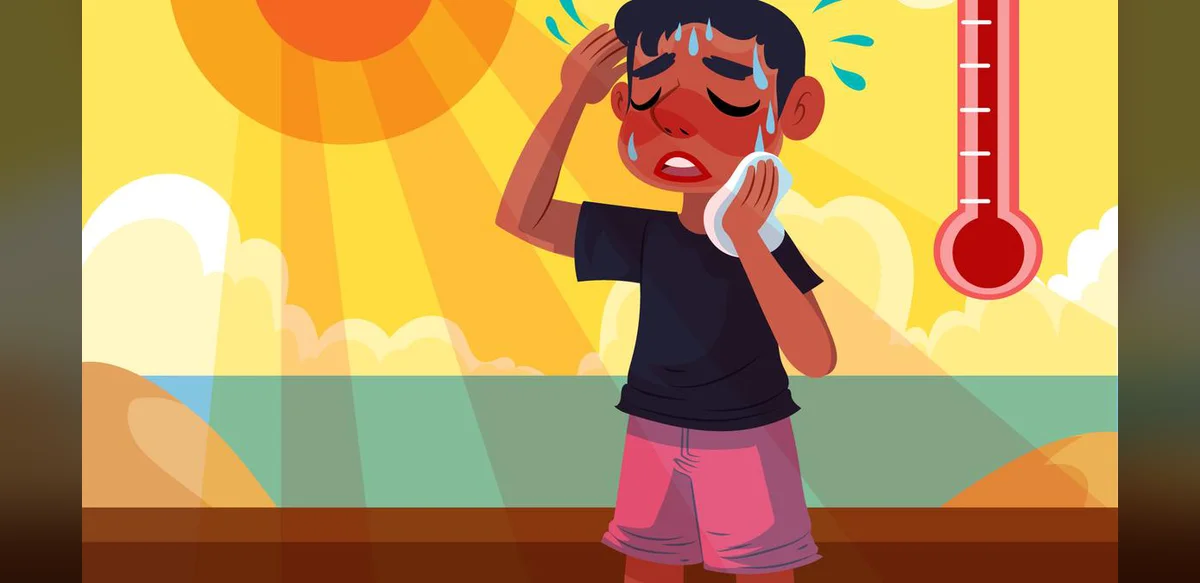
Heatstroke is a serious condition that occurs when the body overheats and loses its ability to cool down. It differs from heat exhaustion, which is milder and often features heavy sweating along with faintness. Heatstroke represents a medical emergency in which temperature control fails completely, risking harm to organs and proving life-threatening without quick treatment.
Warning signs include hot dry skin, confusion, fast heartbeat, dizziness and nausea. These appear when internal temperature regulation is overwhelmed. Without effective cooling through perspiration, dehydration sets in and core temperature rises, prompting further responses such as mental disorientation and increased pulse.
Basic precautions involve staying hydrated, choosing light clothing and applying sunscreen. Outdoor activities should be scheduled outside peak sun hours between 10 am and 4 pm, favouring early morning or evening instead.
Medical expert Prof. Dr. P. Saravanakumar notes that children often overlook fluid intake during play, leading to dehydration marked by thirst, dry mouth, headache, nausea, muscle cramps or breathing difficulty. Immediate response requires moving the child to a cooler area, providing cold water and lowering body temperature.
Sugary cold drinks and ice cream fail to restore fluids adequately and may trigger throat irritation or stomach issues from outside foods. Children face higher risk due to greater surface area relative to body mass and softer skin, resulting in faster heating, reduced sweating and less efficient heat loss than adults.
If heatstroke is suspected, move the child to shade or air conditioning, supply cool fluids, apply damp cloths with fanning, place ice packs on neck groin and armpits, seek emergency care and monitor responsiveness while offering liquids.
Daily fluid targets are roughly 820 ml to 1 litre for those under five and about 3 litres up to age 13, with regular intake encouraged throughout the day rather than only when thirsty.

