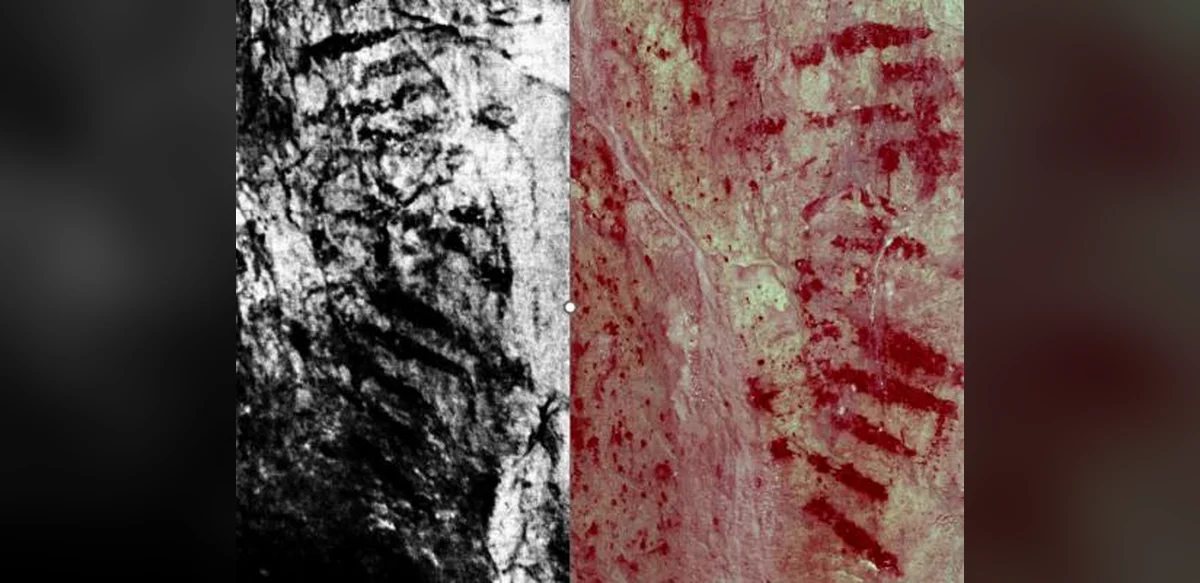
A discovery first reported in 1912 was later rejected but has now been verified through modern analysis. Horizontal red bands in Bacon Hole cave near the Mumbles in south Wales were initially identified as Palaeolithic art but dismissed by 1928 as natural mineral seepage. New research using uranium-thorium dating has established that the markings were created around 17,100 years ago, making them the earliest known cave art in Britain and north-western Europe. The team led by Dr George Nash applied current scientific techniques unavailable in earlier decades. Analysis confirmed the pigment contains calcite and clay residues consistent with deliberate human application by finger rather than natural processes. The lines form an intentional, evenly spaced pattern. The site lies in limestone cliffs on the Gower peninsula overlooking the Bristol Channel. Researchers recommend protected status as a scheduled monument. The findings appear in the journal Quaternary and were supported by the National Trust and the Bradshaw Foundation. Similar Upper Palaeolithic art has been recorded at nearby Cathole Cave with dates between 14,500 and 12,500 years ago.