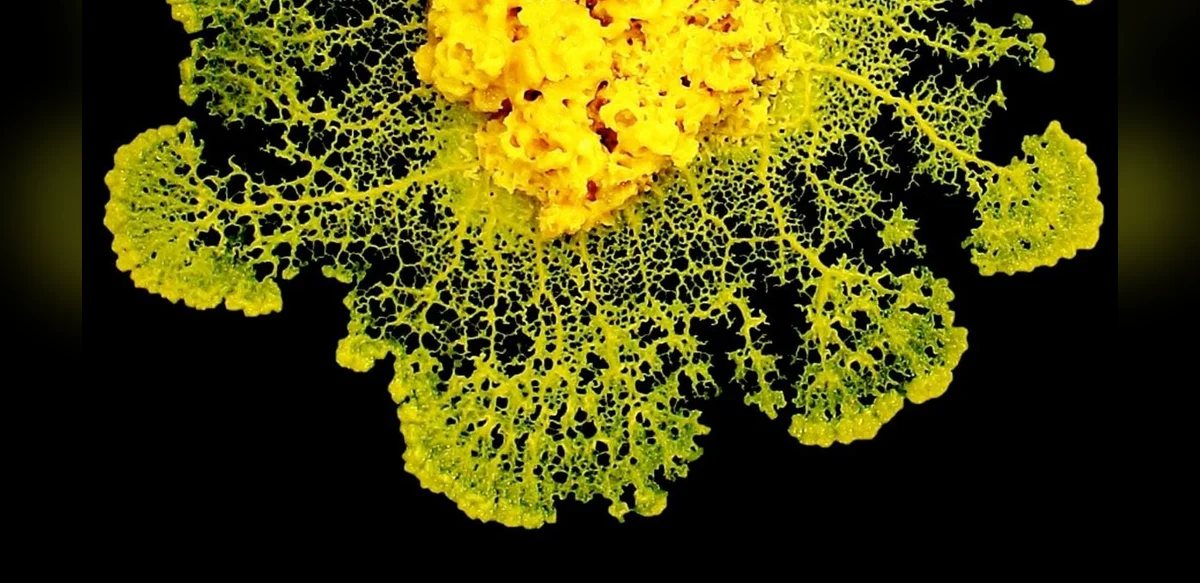
Slime molds are unusual organisms that are neither molds nor fungi. For much of their existence they appear as plasmodia or amoebae and lack the fixed forms seen in most other living things. They are known for displaying what seems like intelligent actions despite having no brain or nervous system. A recent study from researchers in Germany and the United States examined how this decentralized process occurs. The work focused on the bright yellow species Physarum polycephalum. When food is scarce this organism can move across surfaces and navigate simple mazes to locate nutrients. Experiments used barriers of blue light to confine the molds. Starved specimens extended small protrusions in multiple directions. Most attempts were retracted but some continued until an exit was found. The study showed that rhythmic contractions help shift internal material and enable the organism to adjust its shape over time. These movements allow the slime mold to select effective paths without central control. The findings offer insight into how systems lacking neurons can still adapt their actions.