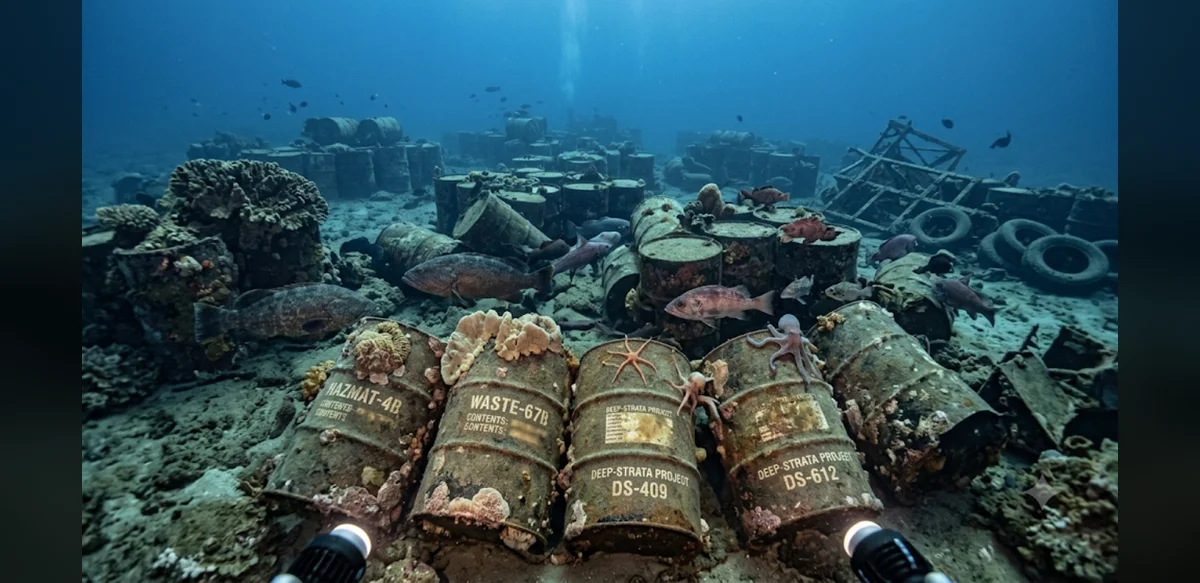
The Atlantic Ocean served as a disposal site during the early nuclear period. Researchers are now examining the seabed using robotic vehicles. Discoveries may alter views on nuclear waste in marine environments. Four kilometres below the Atlantic surface, beyond sunlight and shipping routes, lies an overlooked part of the nuclear era. More than 200,000 barrels of radioactive waste rest across a wide seabed area. They were placed there over decades in the latter half of the twentieth century, when deep-sea dumping was considered a standard approach. After the barrels sank, focus shifted elsewhere. An international team is returning with autonomous underwater vehicles suited for extreme depths. The project seeks to map the barrels, many unlocated precisely, and assess their condition after decades on the seafloor along with any effects on deep ecosystems. The effort may answer a question open for over thirty years about the fate of this waste. Before climate and plastic issues took centre stage, governments confronted rising radioactive waste from labs, hospitals and nuclear facilities. From 1946, waste was sealed in steel drums, often with concrete or bitumen, and shipped offshore to the deep north-east Atlantic. Depths over 4,000 metres and isolation were thought to separate it from people. Operations continued for years, including large dumps in 1967 and 1969. These acts occurred in international waters without rules at the time. Limited knowledge of deep-sea life existed then, and the seabed was seen as mostly lifeless. Environmental concerns grew in the 1970s and 1980s, leading to a 1993 global ban on sea disposal of radioactive waste. The barrels stayed in place. Locating them now proves harder than the original dumping. Historical records give broad zones but lack exact positions. Currents and seabed features have likely shifted distributions. The NODSSUM project uses the UlyX vehicle to map large seabed sections with sonar. Early scans found thousands of barrels across more than 160 square kilometres, some partly buried or colonised by organisms. Samples of water, sediment and life are being taken to check for leaks. Physicist Patrick Chardon noted the goal is to evaluate container state and ecosystem risks. The waste holds varied radionuclides with differing properties, and container durability over decades remains uncertain.