


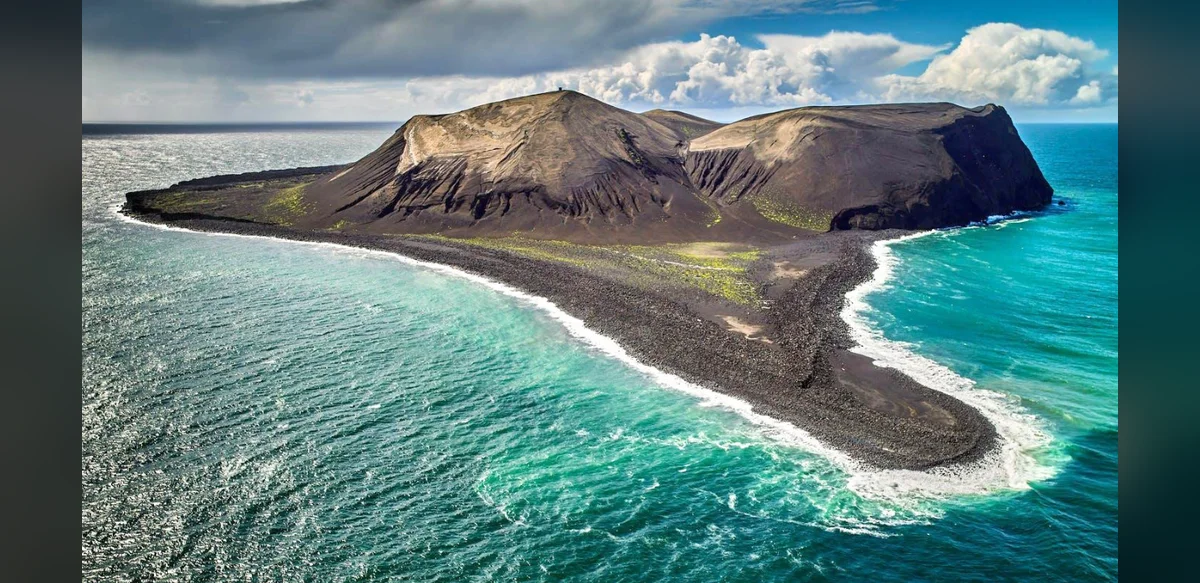
Surtsey formed in 1963 after an underwater volcanic eruption off Iceland’s southern coast. The event created one of Earth’s youngest islands, now a strictly protected nature reserve where public access is prohibited. Only approved researchers may visit under controlled conditions to study how life develops without human influence.
The eruption started on November 14, 1963, when an undersea volcano broke through the Atlantic about 32 kilometers from shore. Fishermen saw steam and ash columns, followed by explosions that hurled debris high into the air. Over three and a half years, layers of lava and ash built the island above sea level.
Named after a Norse fire giant, Surtsey once spanned 2.7 square kilometers but has shrunk due to ocean erosion. Scientists monitor its changing coastline while tracking ecological changes.
The island offered a rare chance to observe an ecosystem beginning from bare volcanic rock with no soil or prior life. The government designated it a reserve, banning tourism and limiting visits to authorized studies. Researchers must clean equipment and clothing to avoid introducing outside species.
Early colonization began with bacteria, fungi, and algae. Lichens and mosses followed, creating soil. Wind, currents, and birds brought seeds, leading to gradual plant establishment. Detailed records now document this succession.
Seabirds nesting from the 1980s accelerated changes by adding nutrients through droppings and carrying seeds. Areas near colonies became greener and supported more insects and plants.
An accidental tomato plant once highlighted the need for strict rules, showing how even minor human traces could affect long-term observations of natural processes.

