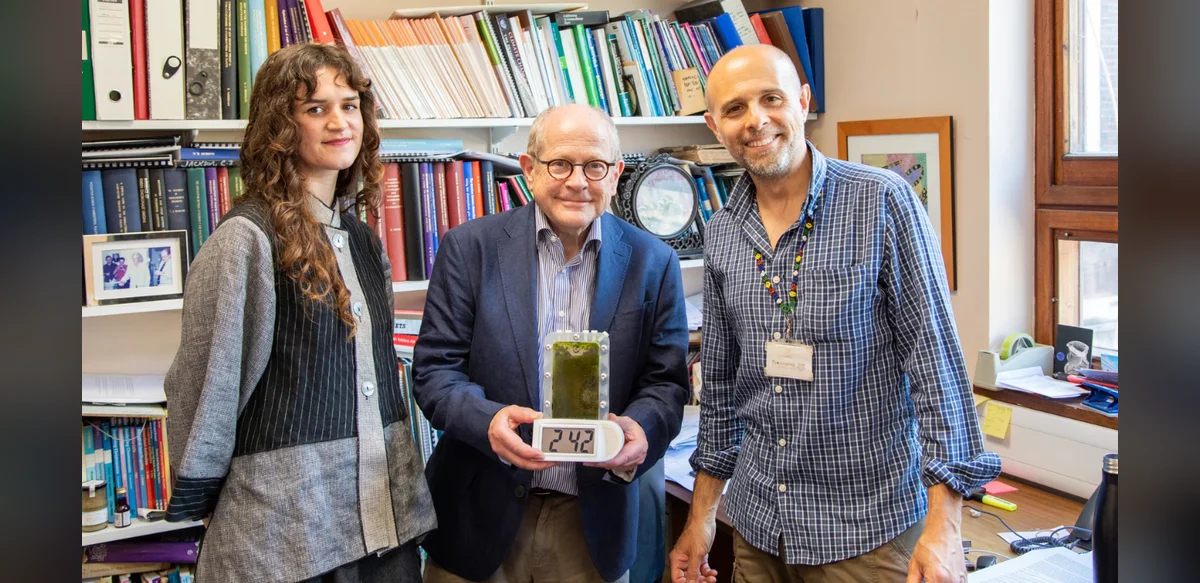
Researchers at the University of Cambridge have created a living bio-battery that produces electricity steadily through photosynthetic algae, providing a possible substitute for millions of single-use batteries in daily devices. The experimental unit captures electrons generated by living cyanobacteria during photosynthesis and respiration, delivering a constant current day and night without damaging the organisms. Although current output remains low, scientists expect the approach could eventually supply cleaner, longer-lasting energy for low-power electronics and cut battery waste. The effort stems from nearly twenty years of work by Dr Paolo Bombelli and Professor Chris Howe in the Department of Biochemistry. Research started in 2006 to test whether living organisms could generate electricity continuously without harm. The results confirmed this was possible. The team found a method to draw a small portion of electrons from the algae using an electrode while preserving normal cell functions, turning the flow into usable current. The system keeps working in darkness because cyanobacteria switch to respiration at night, releasing electrons that sustain electricity production. The longest test unit has operated for over six years with the same organisms. The researchers target small disposable batteries used in remote controls, clocks, sensors and Internet of Things devices rather than high-power applications. These batteries often contain mined materials linked to environmental harm. The bio-battery offers a renewable alternative that avoids such impacts.