


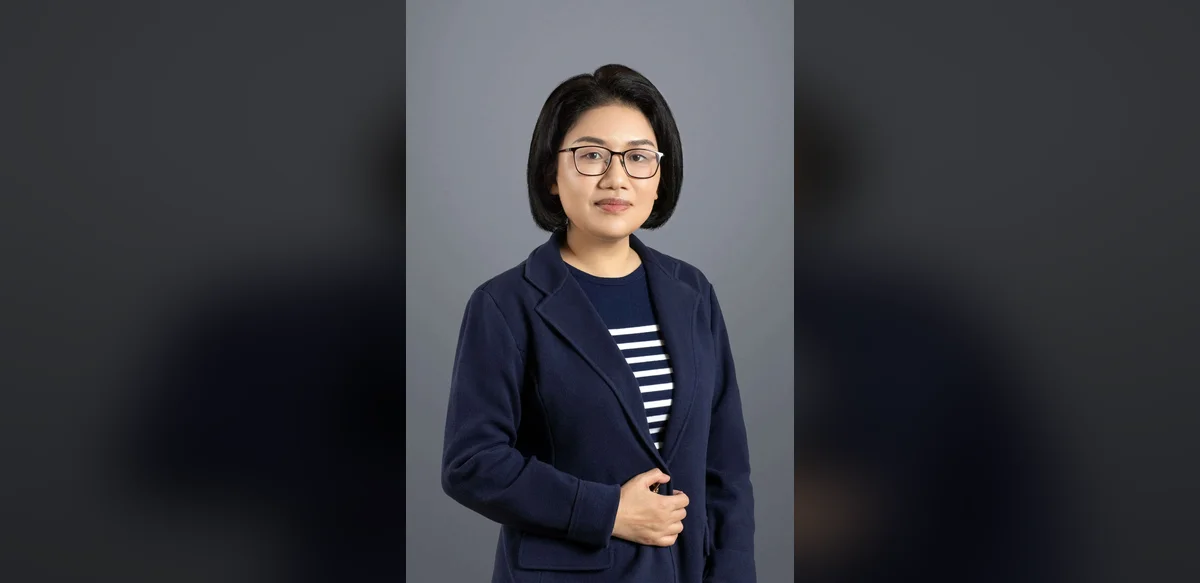
He Tingbo took leadership of Huawei’s chip development in 2003, receiving an annual budget of $400 million and a role that would place her at the heart of China’s key technology push. More than twenty years later, she is widely known in Chinese tech circles as the company’s chip development leader and has risen to become a senior executive and a symbol of efforts to overcome U.S. restrictions while building domestic semiconductor capacity.
She serves as president of Huawei’s semiconductor unit and director of its Scientist Committee. She is also one of two women on the company’s 17-member board, alongside Meng Wanzhou.
In a recent keynote at the IEEE International Symposium on Circuits and Systems in Shanghai, she discussed new approaches to semiconductor advancement as traditional scaling methods reach limits. For years, progress relied on smaller transistors and higher density, known as Moore’s Law, but physical constraints have reduced its impact.
U.S. sanctions since 2019 restricted Huawei’s access to advanced foreign chip technology and production, affecting its smartphone and telecom businesses. Later restrictions extended similar challenges to many Chinese firms, raising the value of alternative semiconductor methods.
She presented Huawei’s Tau Scaling Law, which the company says can direct chip progress as older scaling slows. The firm stated that her team has applied the approach for six years and produced 381 chips in volume. The concept emphasizes faster data movement across devices and systems rather than smaller transistors.
Her career has followed Huawei’s growth, its difficulties after sanctions, and its renewed focus on China’s technology goals. Born in 1969 in Changsha, she joined the company in 1996 after degrees in semiconductor physics and communication engineering. She helped establish HiSilicon in 2004, expanding it into a broad chip design operation covering system-on-chip, optoelectronics, and packaging for multiple product areas.
Following the sanctions, she played a central part in internal resilience measures, including a 2019 letter to staff describing the unit’s role in supporting the company and national objectives.

