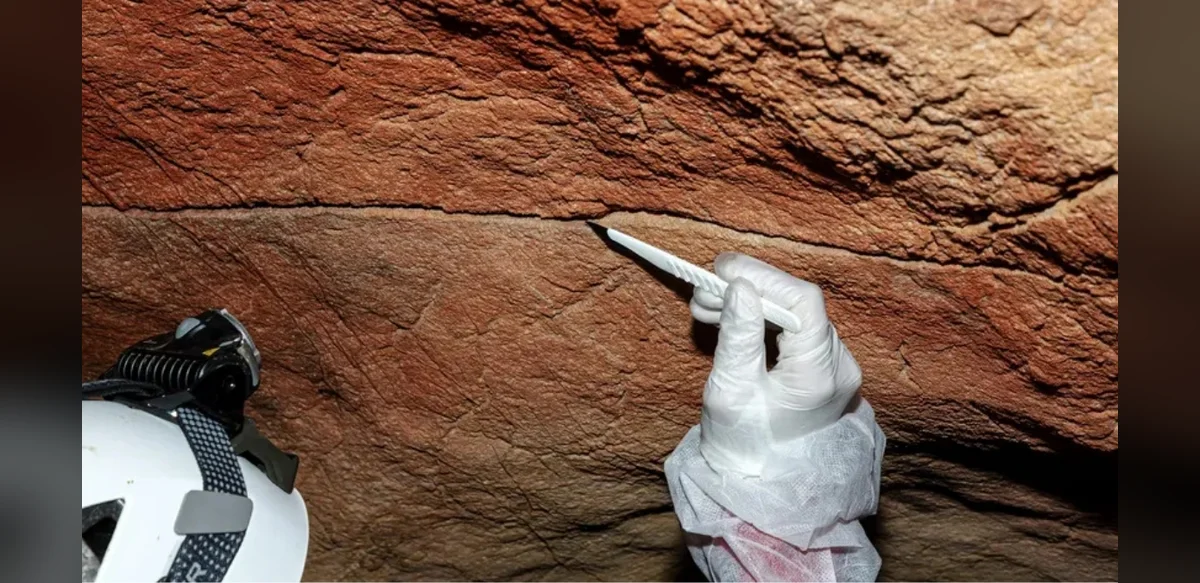
Rock paintings connect people to prehistoric ancestors in a distinctive manner. They also highlight a long history of certain motifs, including one carving showing a figure warding off leopards. Unlike other finds from ancient locations, rock art is hard to tie to specific creators because it appears on cave surfaces without direct links to buried sediments or objects that usually contain DNA traces. This key element of human culture, which reveals the growth of abstract and creative thought, had stayed outside the scope of genetic studies until recently. A new study in Nature Communications describes how an international group found that human DNA can remain on cave walls for thousands of years. Although the DNA traces cannot be directly linked to the artists, the work provides the first proof of such long-term preservation on cave surfaces. The project examined 24 rock art panels from 11 caves in Spain and Portugal. These panels included basic lines, shapes, figures, and hand stencils. Scientists also tested floor sediments where pigments were mixed and examined a bird bone stained with red ochre that may have served as a tool. One sample contained sperm whale DNA, hinting at possible hunting of marine animals. Out of 120 wall samples, only five held human DNA. Two showed only human genetic material, likely left by direct contact such as hands or breath. The other three included animal DNA, pointing to indirect deposition like water flow. Four of the five positive samples came from unpainted wall areas used as controls. No DNA was recovered from the bone tool due to modern contamination. Preservation seems uncommon, with just one painted panel yielding results. A positive note is that the successful sample was covered in calcite, a widespread mineral. The DNA from the Covarón site belonged to modern humans matching a Western hunter-gatherer group typical in Iberia. While preservation varies, the approach offers a new way to study past populations. More work is needed to improve techniques and identify conditions for better recovery rates. With additional samples, researchers aim to determine details such as the sex or group identity of those who touched the walls and how far people explored caves.