


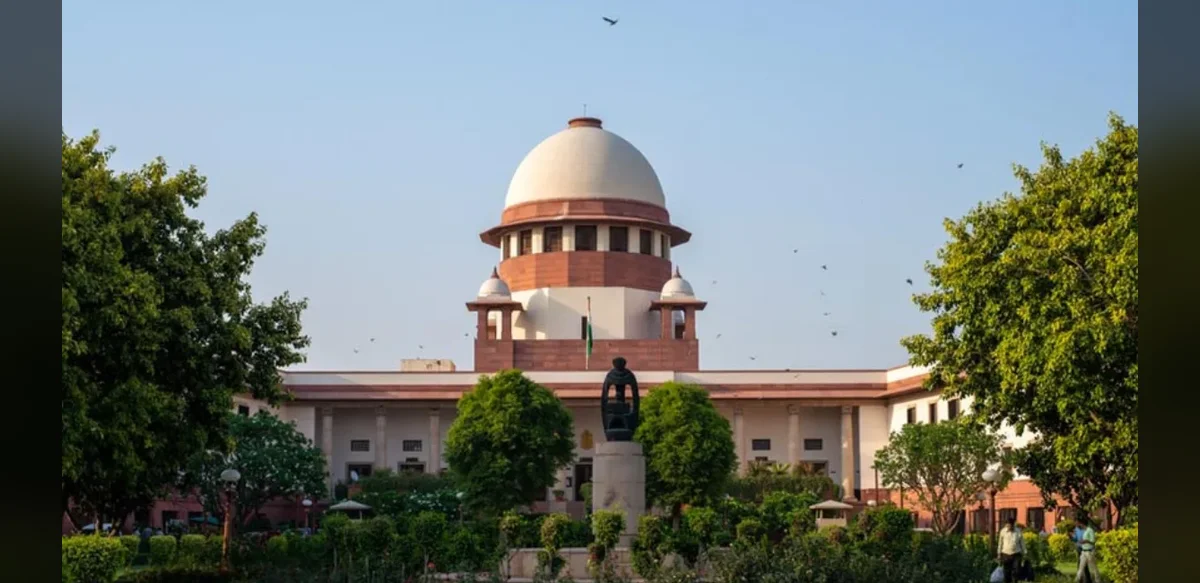
The Supreme Court on July 16 directed the Tamil Nadu government to consult the Union government on establishing Jawahar Navodaya Vidyalayas across districts in the state.
A Bench of Justices B V Nagarathna and R Mahadevan noted that India functions as a federal society and advised against an adversarial stance by the state. The court observed that Tamil Nadu remains the only state without any centrally run JNVs and urged officials to inform central secretaries about the state’s approach with a constructive outlook.
Tamil Nadu has maintained that the three-language formula, including Hindi, used in JNVs conflicts with its two-language policy. While hearing a special leave petition challenging a 2017 Madras High Court order to allocate land for the schools, the Bench instructed the state to engage with the Centre. The High Court ruling followed a petition by Kumari Maha Sabha.
The Supreme Court had stayed the High Court directions in December 2017. It clarified that the language policy should not be seen as an imposition but as an opportunity, noting that state language, English and any third language can be accommodated without mandating Hindi.
The court emphasised the need to protect students’ access to JNVs and advised against rejecting central schemes solely due to their origin. Discussions between the governments are ongoing, and the matter was listed for August 11. The Union government stated that 689 JNVs operate nationwide under the 1986 National Policy on Education, yet none exist in Tamil Nadu due to non-acceptance of the scheme.
Tamil Nadu proposed financial support for its Model Residential Schools or policy adjustments to match state laws, including the Tamil Learning Act, 2006. A consultation meeting occurred on January 5, 2026, following earlier court directions.

